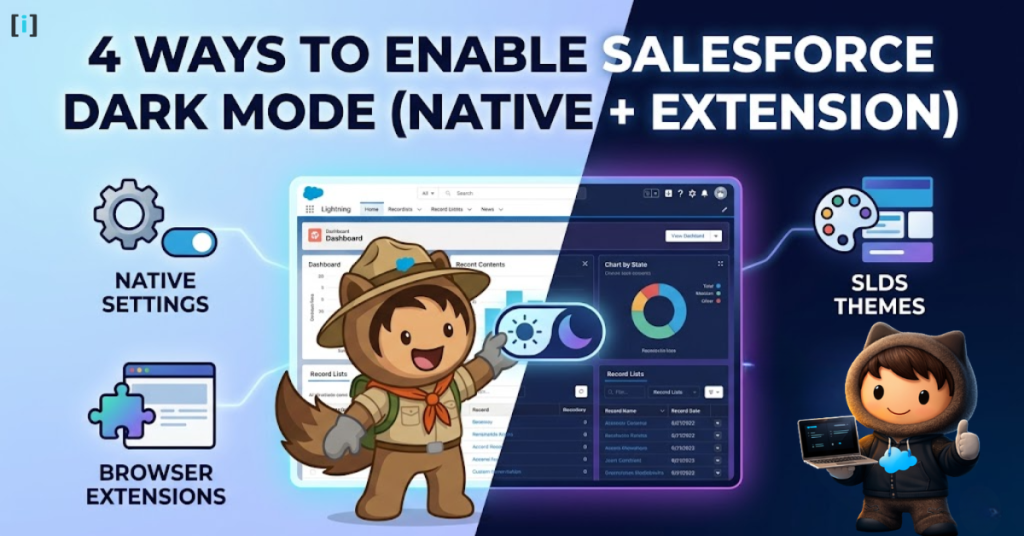
Yes, Salesforce now supports dark mode natively.
As of the Winter ’26 release, Salesforce dark mode is available directly within the platform for certain editions, so you don’t need any extensions to use it. You can simply enable it from your settings if your org supports the feature.
If you’re on an older release or using an edition where it’s not yet available, you can still use alternatives like the Lightning Extension for Chrome or browser level extension to get a similar dark mode experience.
Dark mode has become very popular in recent years. It allows you to switch the interface of an application to darker colors, which helps reduce the amount of blue light from your screen.

If you are spending most of your day inside Salesforce like logging calls, updating opportunities, building flows. After a few hours, that bright white screen can start to feel a bit too much. That’s where dark mode helps. It’s a small change, but you’ll notice the difference almost immediately.
The good news is that Salesforce now offers a native dark mode, introduced in the Winter ’26 release as part of SLDS 2 (Salesforce Lightning Design System 2). If your org supports it, you can enable dark mode directly within the platform no extensions needed.
If you’re on an older release or using an edition where this feature isn’t available yet, don’t worry. There are still reliable ways to get dark mode working without waiting.
In this guide, we’ll cover every available method — the new native option, the Lightning Extension, third-party browser tools so you can choose what fits your setup best.
Does Salesforce Have a Built-In Dark Mode?
Yes and this is a big deal. For years, the answer was no.
Earlier, Salesforce relied mostly on a Chrome extension as the only supported way to get dark mode. That changed with the Winter ’26 release.
Salesforce introduced native dark mode as part of SLDS 2 (Salesforce Lightning Design System 2), which is gradually rolling out across the platform. This feature is currently available in Free Suite, Starter Suite, Pro Suite, Professional, Enterprise, and Developer Edition orgs. Salesforce has also confirmed that support will expand further over time.
Explore how to Find Salesforce Edition.
There is one important requirement, though. Your org must be using an SLDS 2 theme, specifically the Salesforce Cosmos theme. If your org is still on SLDS 1, you’ll need to switch to SLDS 2 before you can use native dark mode.
Once that’s in place, enabling dark mode is straightforward and only takes a few clicks in Setup.
Native dark mode is currently in Beta. It is available in SLDS 2-enabled orgs and is gradually rolling out to more editions. If you’re not sure whether your org supports it, go to:
- Setup > Themes and Branding
- Look for the Salesforce Cosmos (SLDS 2) theme. If it’s available, you’re good to go.
What Is SLDS 2 and Why Does It Matter?
SLDS 2 is the next evolution of Salesforce’s design system for Lightning Experience. It builds on the original Lightning Design System (SLDS 1) and brings a more modern, consistent, and flexible UI across the platform.
With SLDS 2, Salesforce has introduced cleaner components, improved accessibility, and most importantly better theming support, including native dark mode.
The key thing to understand is this: dark mode in Salesforce is powered by SLDS 2. It’s not just a simple color inversion. The system is designed to properly adjust components, contrast levels, and accent colors so everything remains readable and visually consistent, while still respecting your org’s branding.
There is one limitation to keep in mind. If a part of Salesforce hasn’t been updated to SLDS 2 yet, it will continue to appear in light mode even if dark mode is enabled. This is expected for now, and Salesforce is gradually expanding SLDS 2 coverage across more areas of the platform.
How to Enable Salesforce Dark Mode – All Methods
There are multiple ways to enable dark mode in Salesforce today. We’ll start with the newest and most recommended approach, and then cover the alternatives for orgs that don’t support it yet.
Method 1: Native Dark Mode via SLDS 2 (Winter ’26+)
This is the official Salesforce method introduced in Winter ’26. It’s built directly into the platform, requires no extensions, and works at the org level. Once enabled by an admin, users can turn dark mode on or off from their own profile.
Who this works for
Free Suite, Starter Suite, Pro Suite, Professional, Enterprise, and Developer Edition orgs using the Salesforce Cosmos (SLDS 2) theme.
Beta Notice: Native dark mode is currently a beta feature in Salesforce. While it is available for use in production, it falls under Salesforce’s Beta Services Terms. Use it with some caution, and keep an eye on release notes as Salesforce continues to improve and expand the feature.
To activate dark mode at the org level, follow these steps in your Starter Suite org.
Total Time: 5 minutes
Open Setup
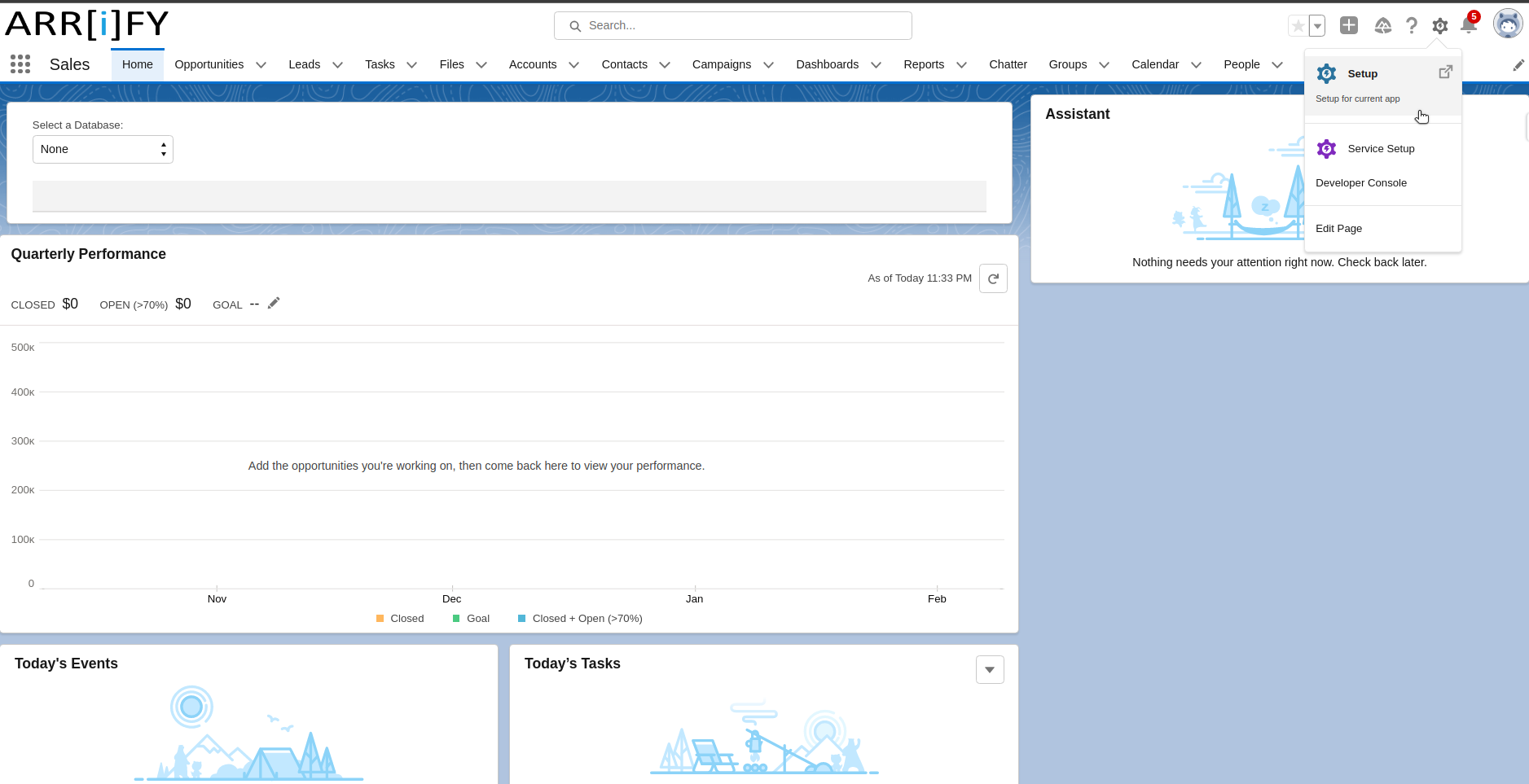
Open the Gear icon located on the top-right corner of the Salesforce interface and select the “Setup” option from the dropdown menu.
Go to Themes and Branding
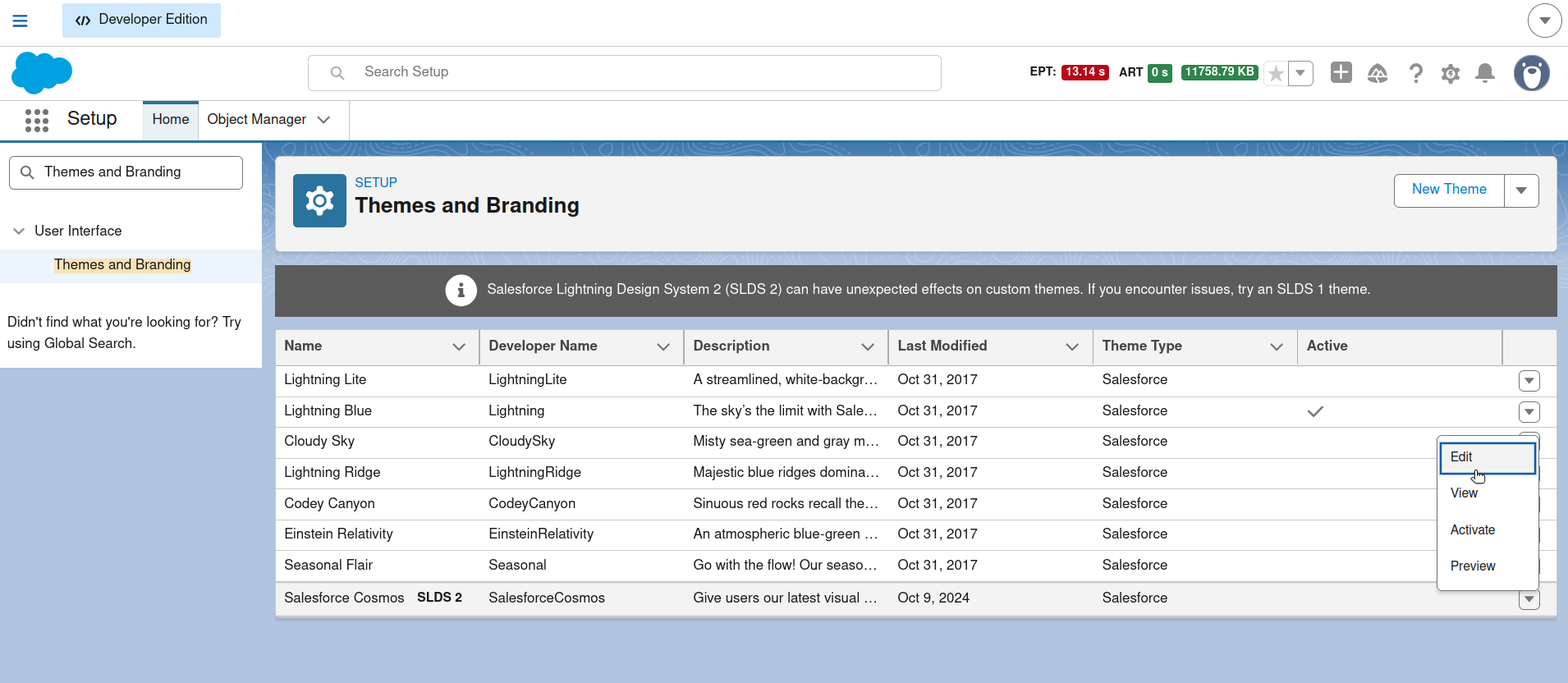
In the Quick Find search box on the left side panel, type Themes and Branding and click on it when it appears in the results.
Find Salesforce Cosmos in the theme list. Click the small dropdown arrow next to it and select Edit.
Enable Dark Mode Option
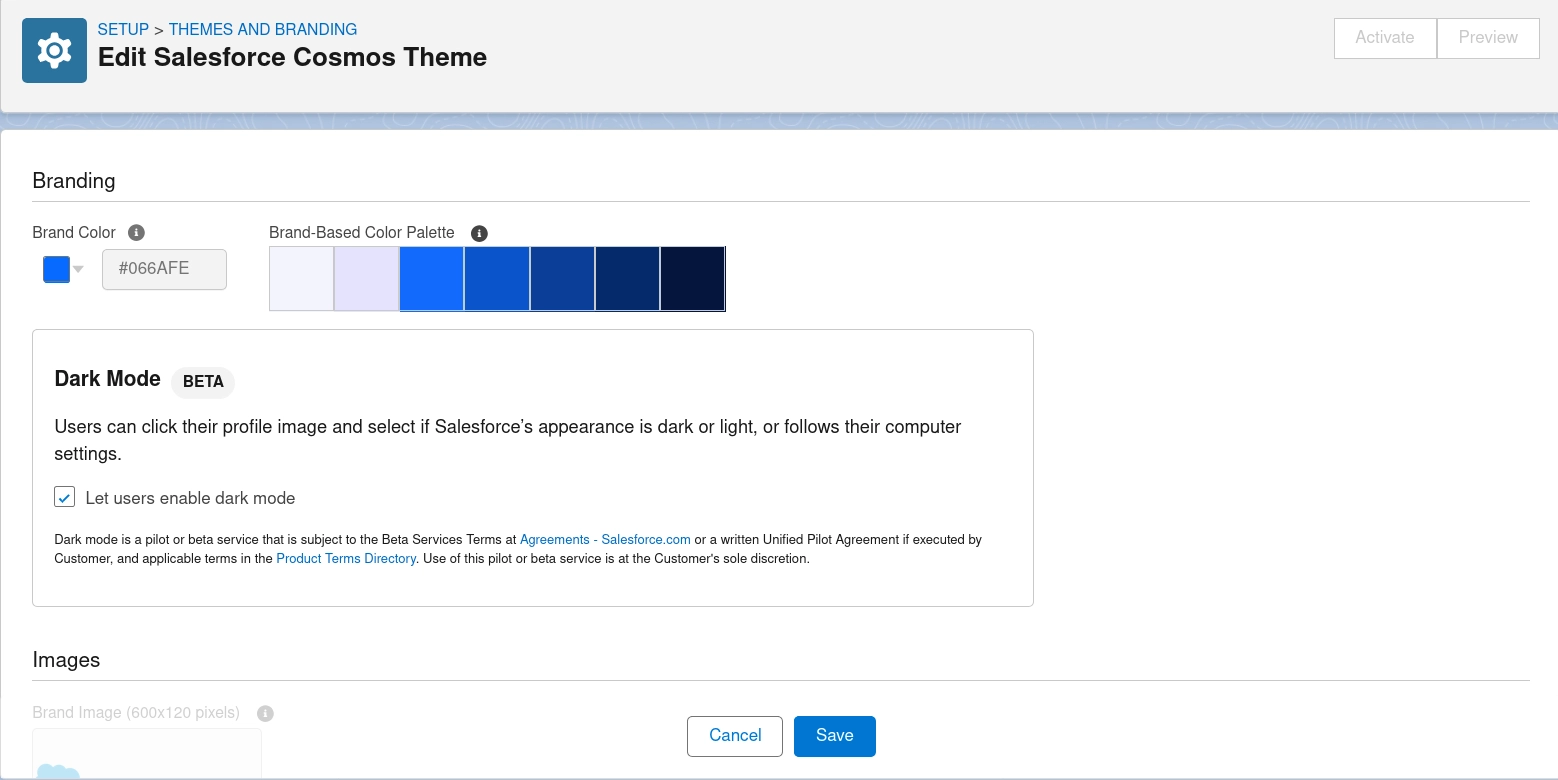
Scroll down on the Edit page until you find the Dark Mode section. Check the box that says Let users enable dark mode.
Click Save.
Activate Dark Mode
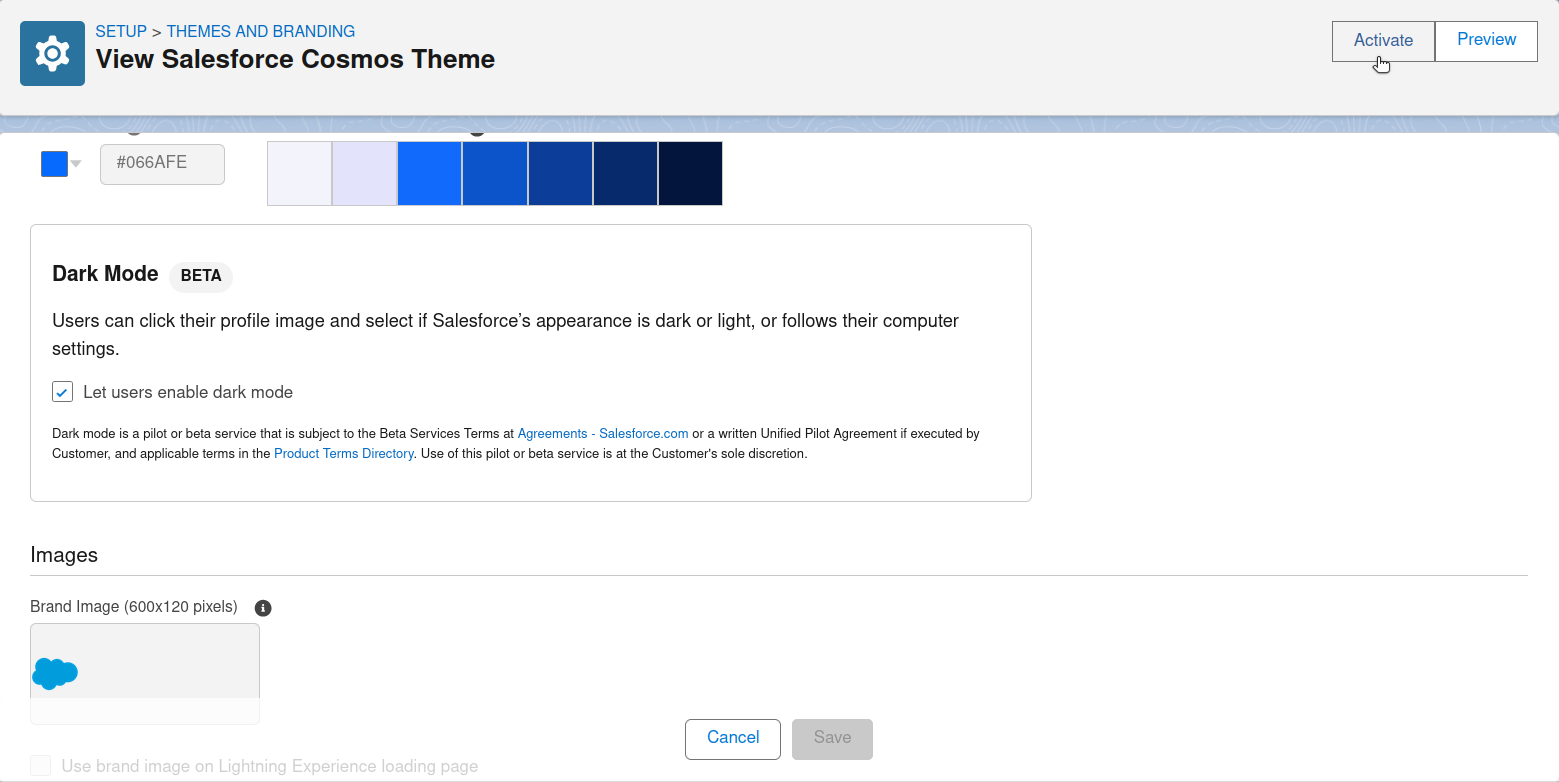
Click Activate. A confirmation popup will appear.
Confirm Activation
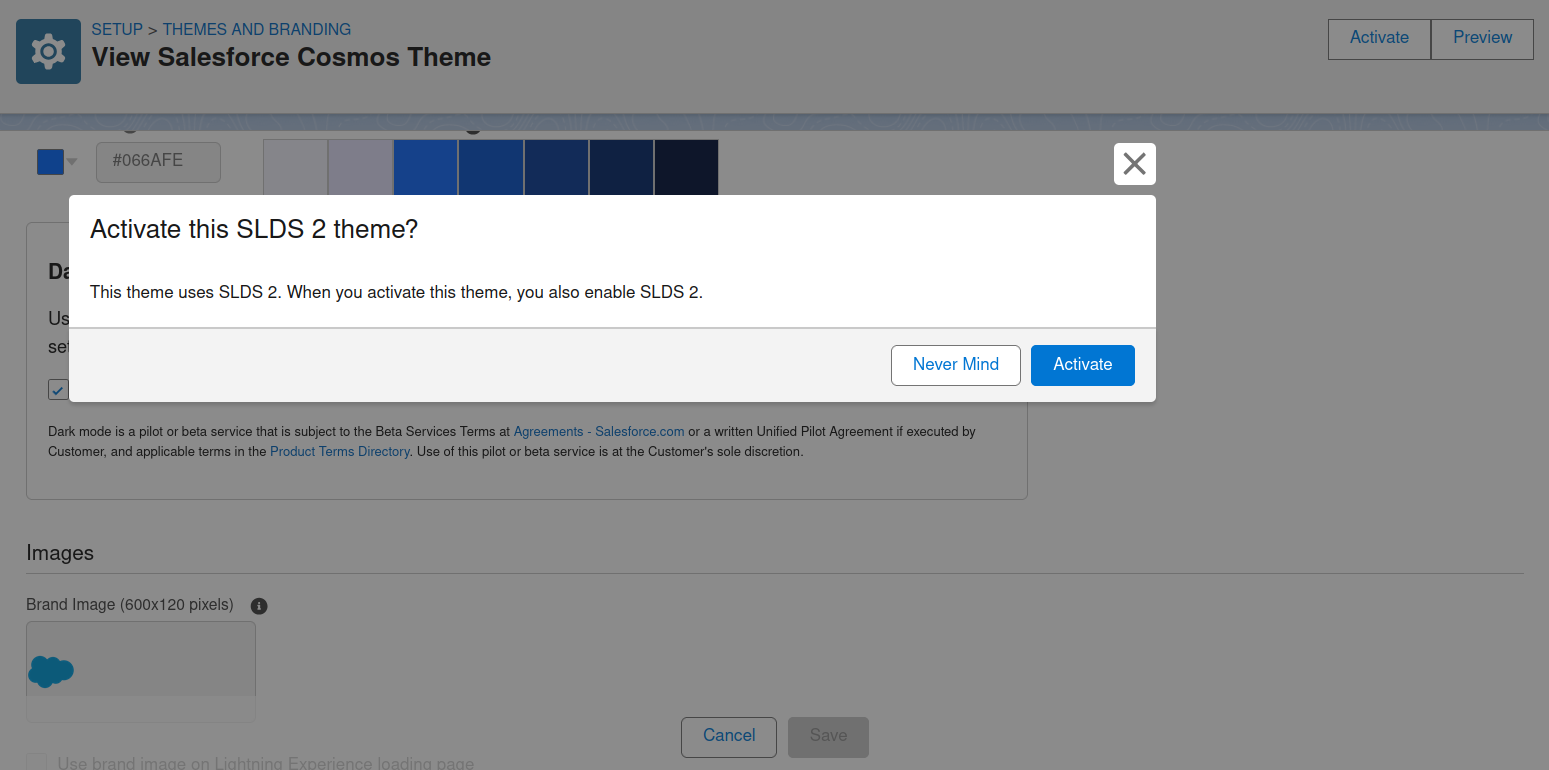
Click Activate again in the popup to confirm.
Admin Setup Complete
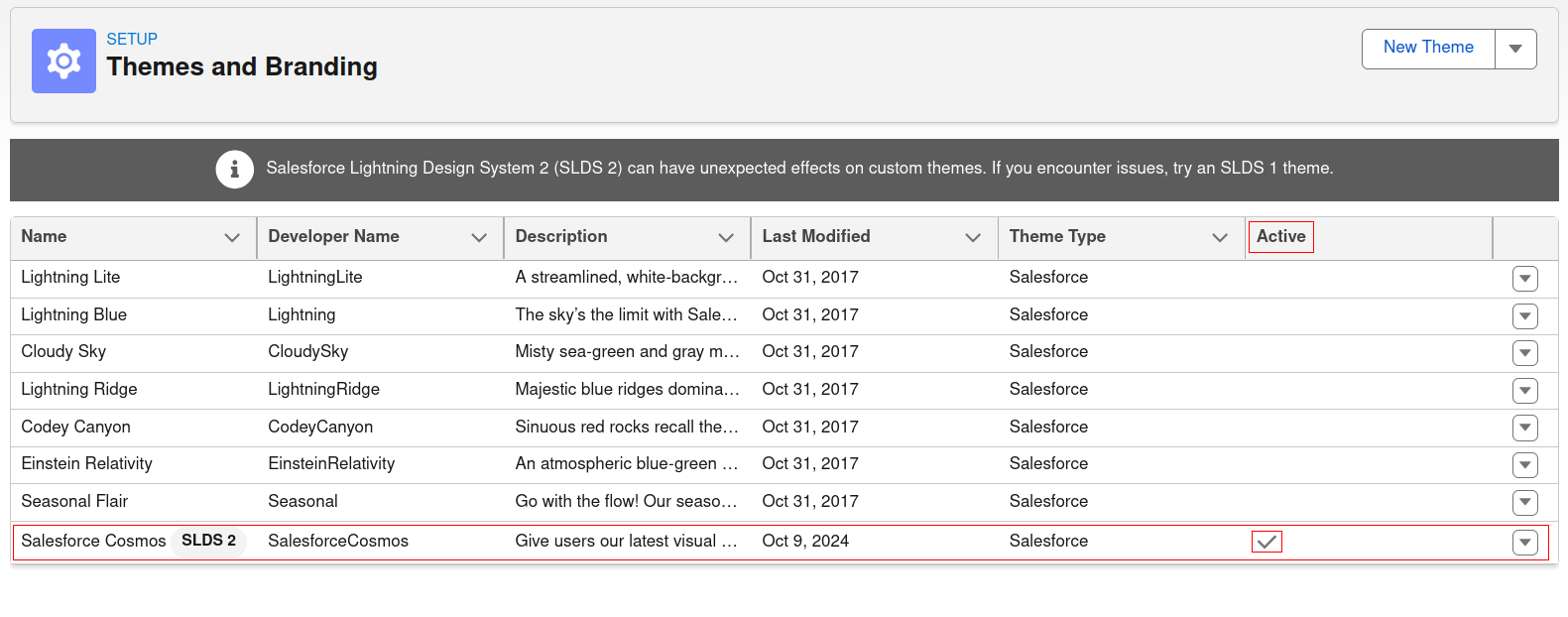
Dark mode is now available in your org. Users can enable it from their own profile.
Dark mode will be deactivated automatically. To re-enable it, switch back to an SLDS 2 theme and repeat the steps above.
Go to App Launcher > Navigate to an App
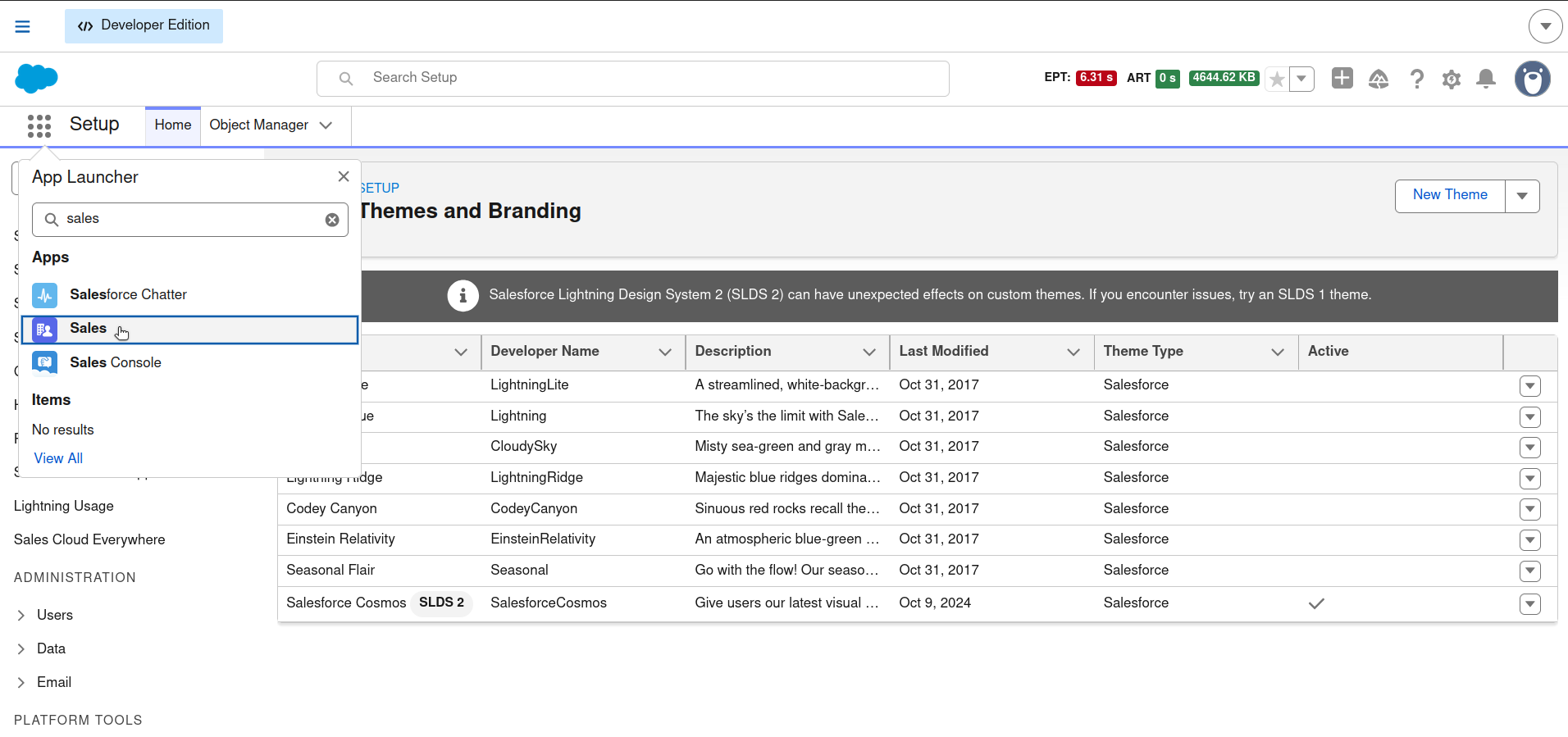
After you enable dark mode preview, you’re still in Setup. Dark mode isn’t enabled in Setup. Navigate to an app outside of Setup to see the dark mode preview and color mode settings.
Users Turn On Dark Mode
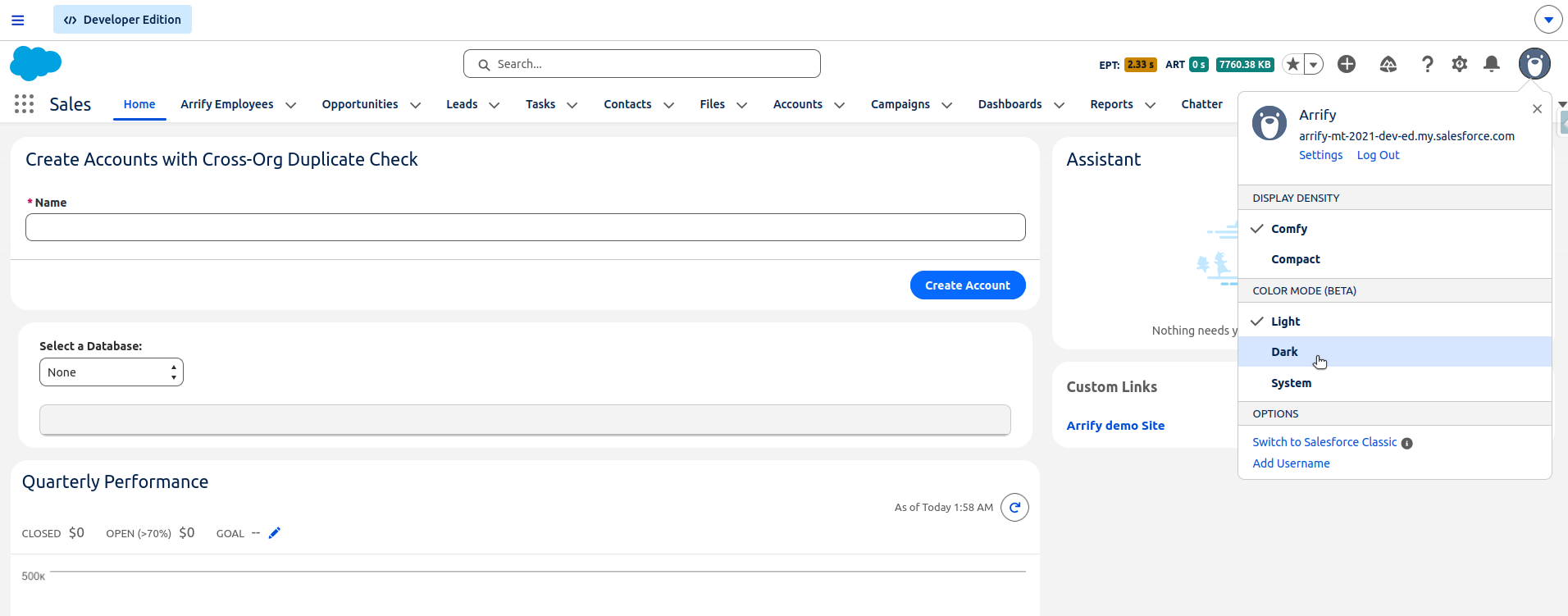
Click your profile photo or avatar in the top-right corner of Salesforce. A dropdown panel will appear.
Look for the Color Mode section in that panel.
Select Dark.
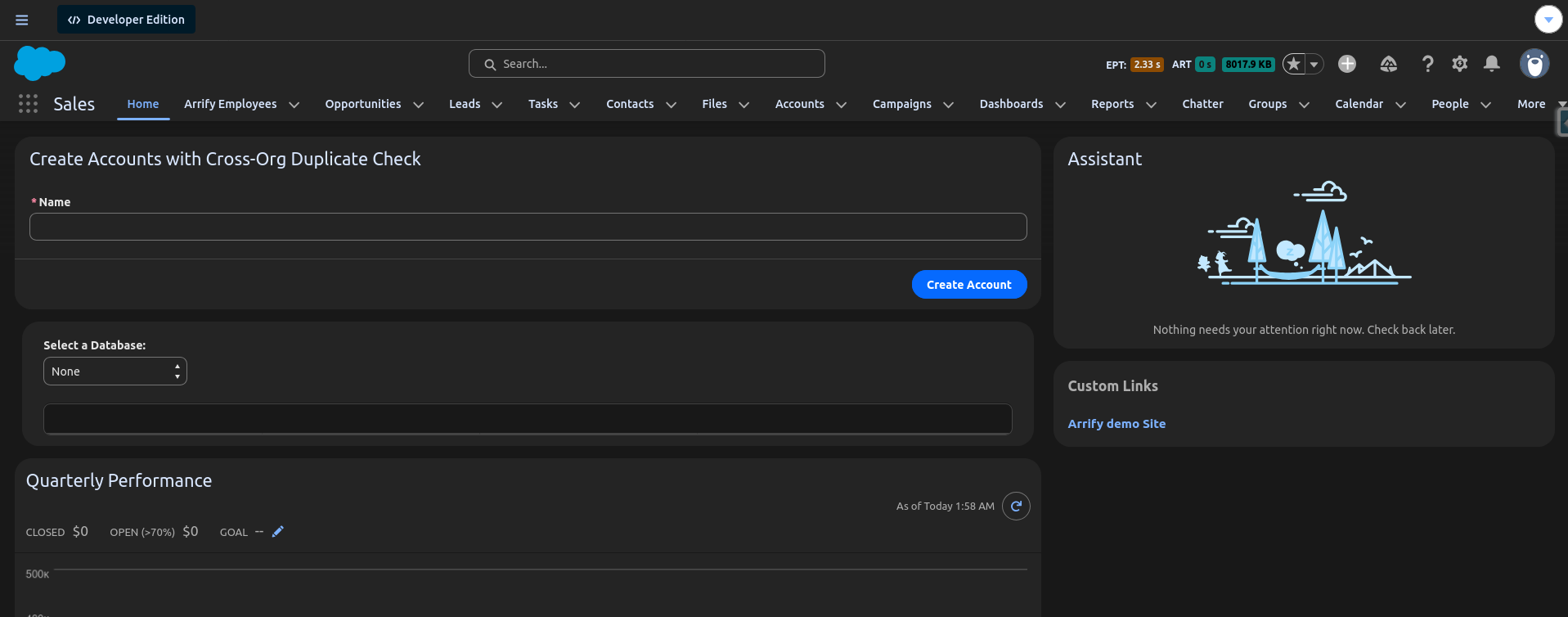
Dark mode activates immediately. No page reload needed.
Dark mode is on. The Salesforce org is now displaying in the Salesforce Cosmos dark theme.
This is a one-time setup done by a Salesforce administrator. Once complete, all users in the org get the option to switch to dark mode from their own profile. You do not need to do this per user.
Method 2: Extensions for Salesforce Dark Mode
If your org is on an older release, doesn’t yet support SLDS 2, or you want a quick solution without involving an admin, There are quite a few extensions available for enabling dark mode in Salesforce.
Some are built specifically for Salesforce, while others work across all websites. Here’s a simple breakdown to help you choose the right one based on your needs.
1. Salesforce Lightning Extension for Chrome
It has been around for years and is still a commonly used option for enabling dark mode when native support isn’t available.
Steps to enable dark mode with the Lightning Extension.
Total Time: 5 minutes
Go to Setup

Open the Gear icon located on the top-right corner of the Salesforce interface and select the “Setup” option from the dropdown menu.
Install the Lightning Extension

In order to enable dark mode in Salesforce, you’ll need to install the Lightning Extension for Google Chrome. To do this, start by opening the Quick Find box in Salesforce and searching for “Lightning Extension“.
Once you see the Lightning Extension option appear, click on it to open the page.
From there, you can download and install the extension for Google Chrome by clicking the add button.
Confirm the Redirect to the Lightning Extension

After clicking on the button to download the Lightning Extension in the previous step, you’ll be asked to confirm that you want to be redirected to an external URL.
Click on “Confirm” to proceed.
Add Lightning Extension

Note that it may take a few seconds for the redirect to occur, so please be patient.
Once you’ve been redirected to the Lightning Extension page, you can proceed with the installation process.
Enable Dark Mode

Once you’ve added the Lightning Extension to your browser, return to Salesforce and click on the extension icon in the top right corner of your browser window. This will open a popup screen with several options.
To enable dark mode, simply toggle the switch next to “Dark Mode” to the “On” position. You should see the Salesforce interface immediately switch to a dark color scheme. If you ever want to switch back to the default light mode, simply toggle the switch back to the “Off” position.
2. Salesforce Dark Theme
This is one of the most comprehensive Salesforce-specific dark mode extensions available. It applies a consistent dark theme across a wide range of Salesforce products with minimal setup.
How to Install and Enable
- Open Google and Search for Salesforce Dark Theme
- Click Get
- In the popup, click Add extension
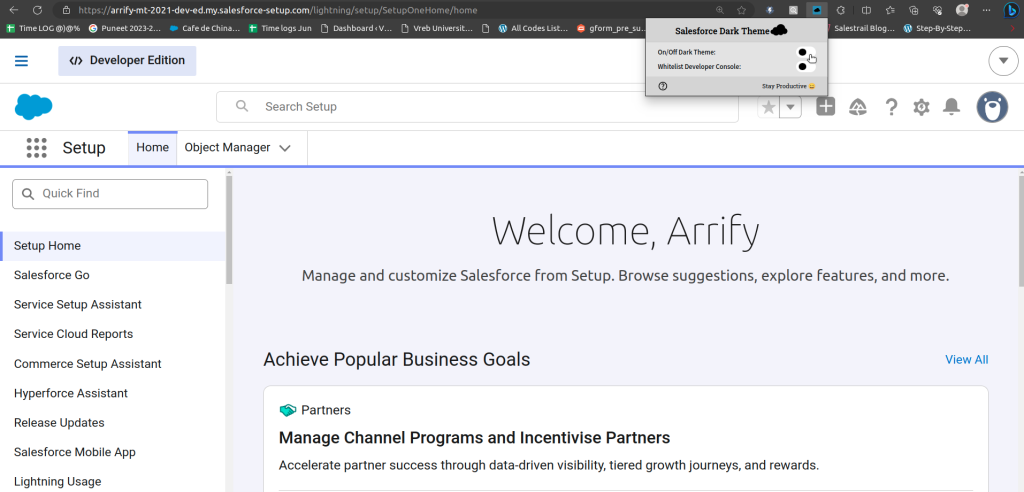
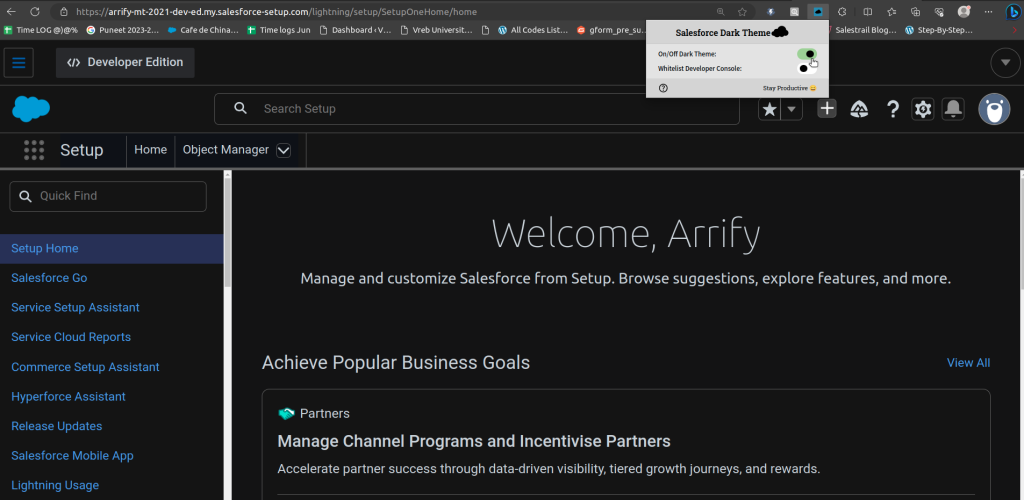
It works across:
- Lightning Experience (main Salesforce UI)
- Classic Experience
- Component Reference Library
- Lightning Design System Library
- Knowledge Articles
- Salesforce Discussion Forums
The biggest advantage is simplicity, no admin access required and no org-level changes needed. It runs entirely in your browser, so it only affects your view and not other users in your org.
3. Dark Reader (Recommended)
Dark Reader is the most widely used option. It works across Chrome, Firefox, Edge, and Safari, and gives you control over brightness, contrast, and color temperature. One useful feature is that it can automatically follow your system’s dark or light mode, which helps if you switch environments during the day.
How to Install and Enable
- Open Google and Search for Dark Reader
- Click Get
- In the popup, click Add extension
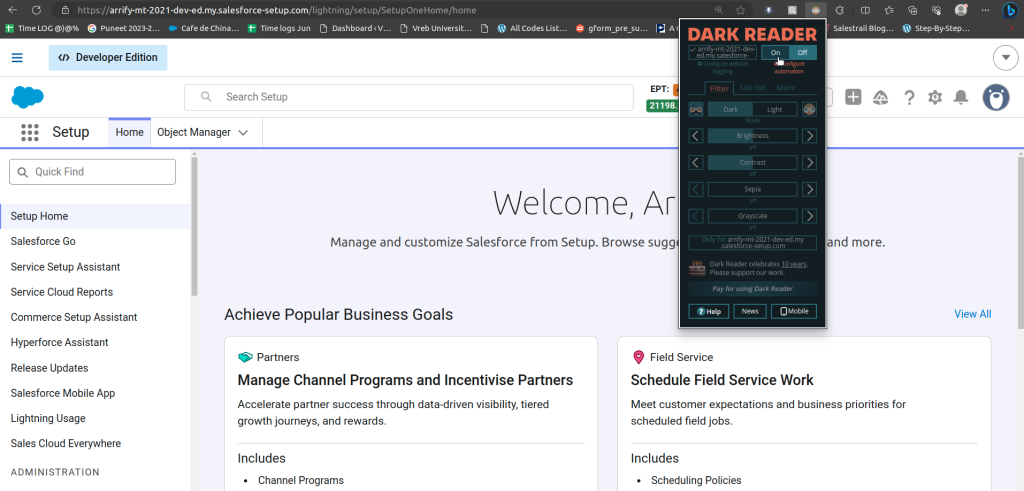
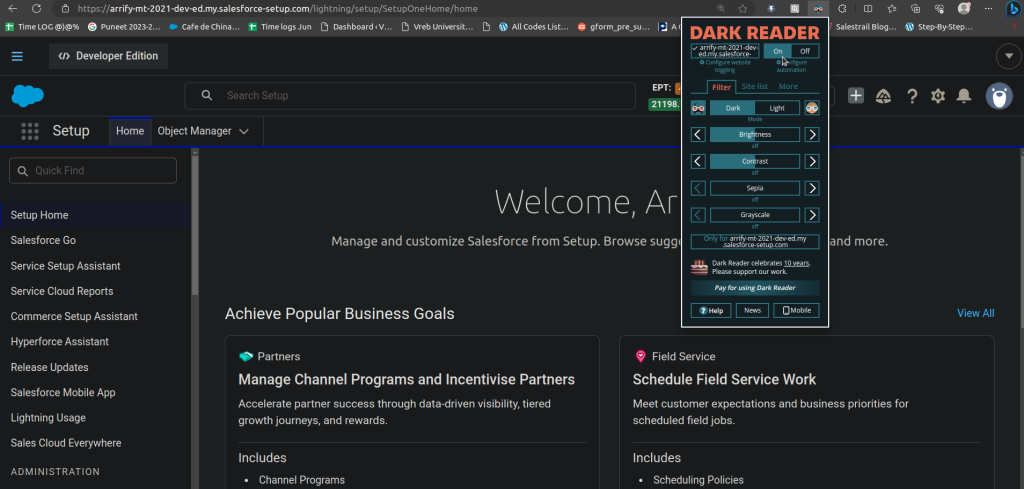
These extensions work at the browser level, which means they apply dark mode across all websites including Salesforce. Because of this, they often handle custom components, Visualforce pages, and embedded tools more consistently.
One thing to keep in mind is that these extensions apply dark mode by adjusting colors automatically. Most of Salesforce will look clean and usable, but some custom components or Visualforce pages may not render perfectly. If that happens, you can simply turn off the extension for that specific page.
Why Dark Mode Is Worth Enabling
Dark mode isn’t just about looks. There are real, practical reasons why a large number of users prefer it once they try it.
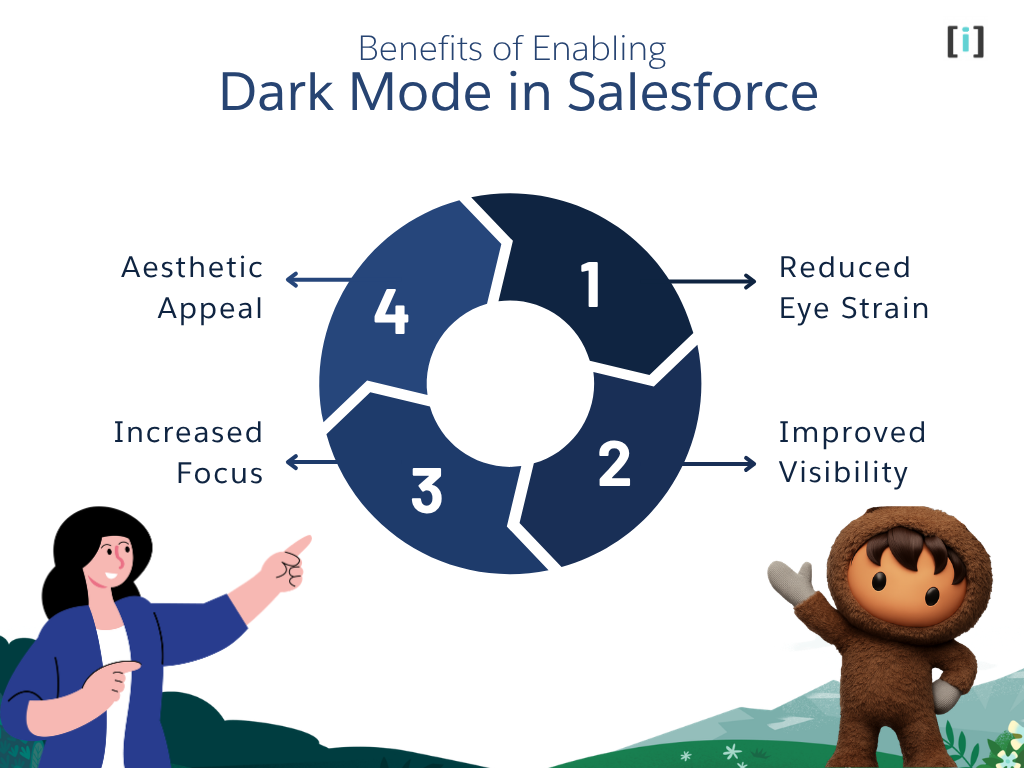
Enabling dark mode in Salesforce has several benefits, including:
Reduced Eye Strain
Dark mode reduces the amount of blue light emitted by the screen, which can be particularly helpful for those who spend a lot of time looking at screens. By reducing eye strain, dark mode can help prevent headaches and other visual discomfort.
Improved Visibility
Dark mode can improve visibility by reducing the contrast between the interface and the surrounding environment. This is particularly helpful when working in low-light environments, as it can reduce glare and make it easier to see the interface.
Increased Focus
By reducing visual distractions, dark mode can help users stay more focused on their work. This can lead to increased productivity and a better overall user experience.
Aesthetic Appeal
Some users simply prefer the look of dark mode, as it can be easier on the eyes and provide a sleek, modern look to the Salesforce interface.
Overall, enabling dark mode in Salesforce can improve user experience, reduce eye strain, and increase productivity. If you haven’t tried it yet, we highly recommend giving it a try.
Tips for Getting the Best Dark Mode Experience
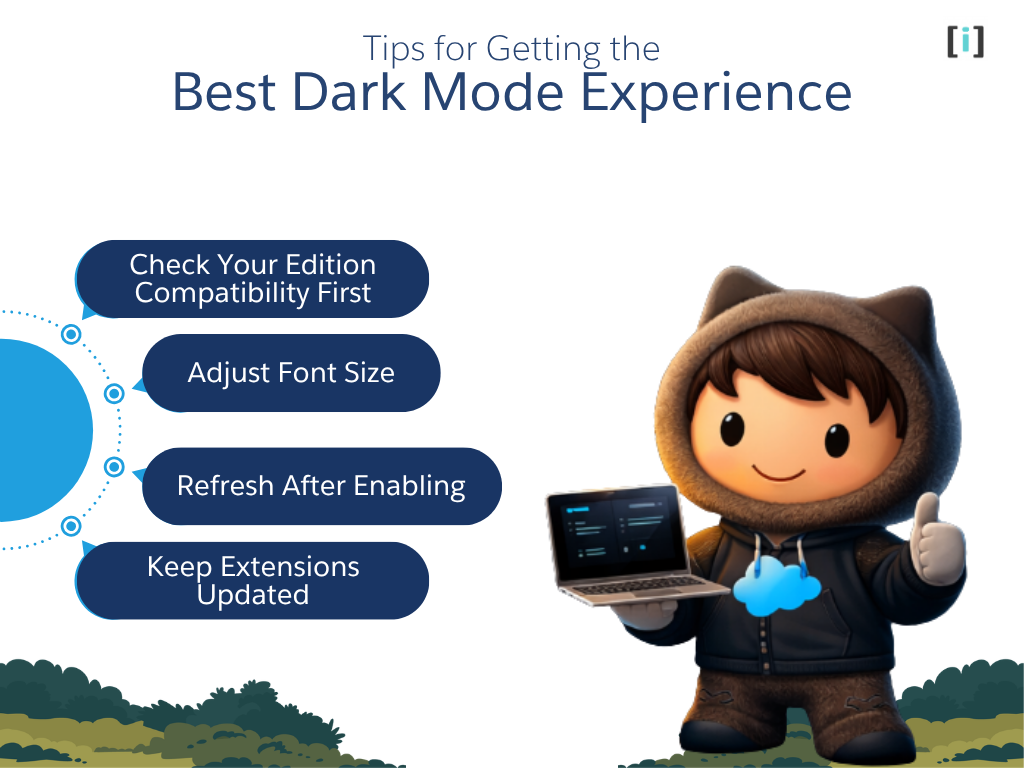
Enabling dark mode is quick, but getting the best experience takes a few extra checks. These tips will help you avoid common issues and make sure everything looks right.
Check Your Edition Compatibility First
Before trying the native method, confirm that your org supports SLDS 2.
- Go to Setup → Themes and Branding
- Look for the Salesforce Cosmos theme
If it’s available, you’re good to go with native dark mode. If not, you’ll need to either transition to SLDS 2 or use an extension for now.
Adjust Font Size
Dark mode can sometimes make text harder to read, especially if the contrast is low. To improve readability, increase the font size in your browser settings.
Refresh After Enabling
After turning on dark mode (any method), do a full page refresh. Sometimes, a few UI elements may still appear in light mode on the first load. A quick refresh usually fixes it.
Keep Extensions Updated
For the best dark mode experience, Make sure your extensions are updated regularly. Developers frequently update extensions to enhance compatibility and fix bugs.
Final Thoughts
Native dark mode in Salesforce is finally here and for many orgs, it’s just a few clicks away.
If you’re on an SLDS 2-supported edition, using Setup → Themes and Branding is the cleanest and most reliable option. No extensions, no extra setup just a built-in experience that works as expected.
If you’re on an older setup or need dark mode immediately, browser extensions are still a solid fallback and can get you most of the way there.
Whichever method you choose, dark mode is one of those small changes that adds up over time. It’s easier on the eyes during long working hours, more comfortable for users with visual sensitivity, and overall just a better experience when you’re spending most of your day inside Salesforce. So why not give it a try today!
FAQs
Does Salesforce have a native dark mode?
Yes as of the Winter ’26 release. Native dark mode is available in orgs using the Salesforce Cosmos (SLDS 2) theme across Free Suite, Starter Suite, Pro Suite, Professional, Enterprise, and Developer Editions.
What is SLDS 2 and do I need it for dark mode?
SLDS 2 is Salesforce’s updated Lightning Design System. Native dark mode is built on top of it, so your org must be using an SLDS 2 theme.
If your org is still on SLDS 1, you won’t get native dark mode yet. In that case, you can use alternatives like the Lightning Extension or Dark Reader until you transition.
Does dark mode work in Salesforce Classic?
Not natively. Both native dark mode and the Lightning Extension are designed for Lightning Experience.
If you’re still using Classic, your best option is a browser-based tool like Dark Reader and Salesforce Dark Theme Extension.
Will dark mode affect Salesforce performance?
No. Dark mode only changes how the interface looks in your browser. It does not affect data, backend processes, or overall performance.
Does dark mode work on Firefox, Edge, or Safari?
Native SLDS 2 dark mode: Works on all modern browsers once enabled
Lightning Extension: Chrome-only
Dark Reader & Salesforce Dark Theme : Works on Chrome, Firefox, Edge, and Safari