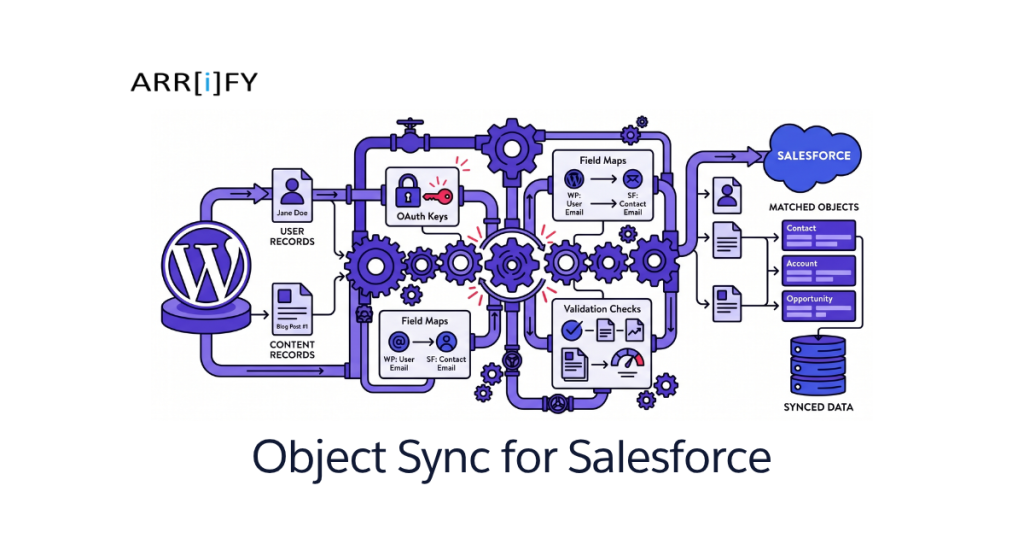
What This Plugin Actually Does
This plugin connects WordPress objects to Salesforce objects and keeps data moving between the two systems. That includes common WordPress data like users, posts, pages, comments, and supported custom post types.
This is not the same thing as a simple form-to-lead plugin. If your goal is only to send a contact form into Salesforce, a lighter option may be better. If you need WordPress user records or content types to stay aligned with Salesforce records over time, this plugin makes more sense.
Typical use cases:
- Sync WordPress users to Salesforce Contacts
- Map a custom post type to a custom Salesforce object
- Update WordPress when Salesforce records change
- Keep a member portal or content-driven site tied to CRM data
The Litmus Test: If you need ongoing object-level sync instead of one-time form submission capture, you’re in the right place.
If you want to compare this plugin against other options first, see Best WordPress Salesforce Plugins: 8 Options Compared or the broader WordPress Salesforce Integration guide.
What You Need Before You Start
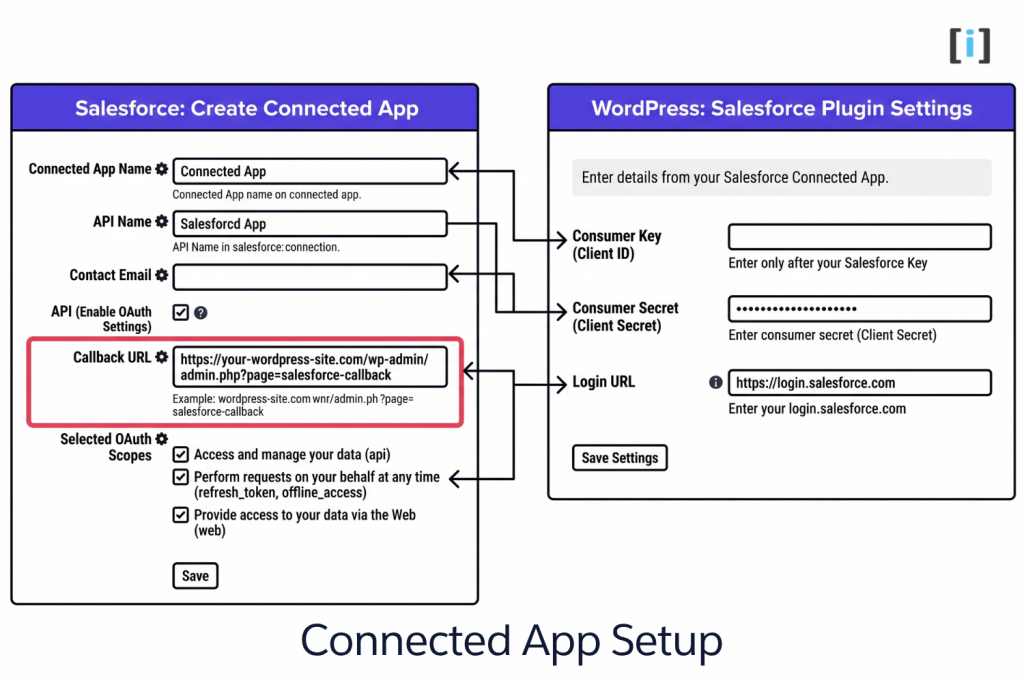
Before you install anything, make sure you have the basics in place. This plugin depends on OAuth authentication with Salesforce, so setup fails fast if one piece is missing.
You should have:
- A WordPress site running over SSL/HTTPS
- Admin access in WordPress
- A Salesforce org you can log into
- Permission to create or manage a Salesforce Connected App
- A clear idea of which WordPress object should map to which Salesforce object
The plugin’s public docs also note minimum platform requirements around modern WordPress, PHP, and Action Scheduler support. If you’re working on an older site, check that first before blaming the sync.
Real Talk: The plugin is free, but it is not “click once and magic happens.” If OAuth apps, callback URLs, and field mapping feel unfamiliar, budget extra setup time.
How to Set Up Object Sync for Salesforce in WordPress
This walkthrough follows the original setup flow but trims the fluff. The goal is simple: install the plugin, create a Salesforce Connected App, authorize the connection, then build a field map and test it.
Total Time: 10 minutes
1. Install and activate the plugin
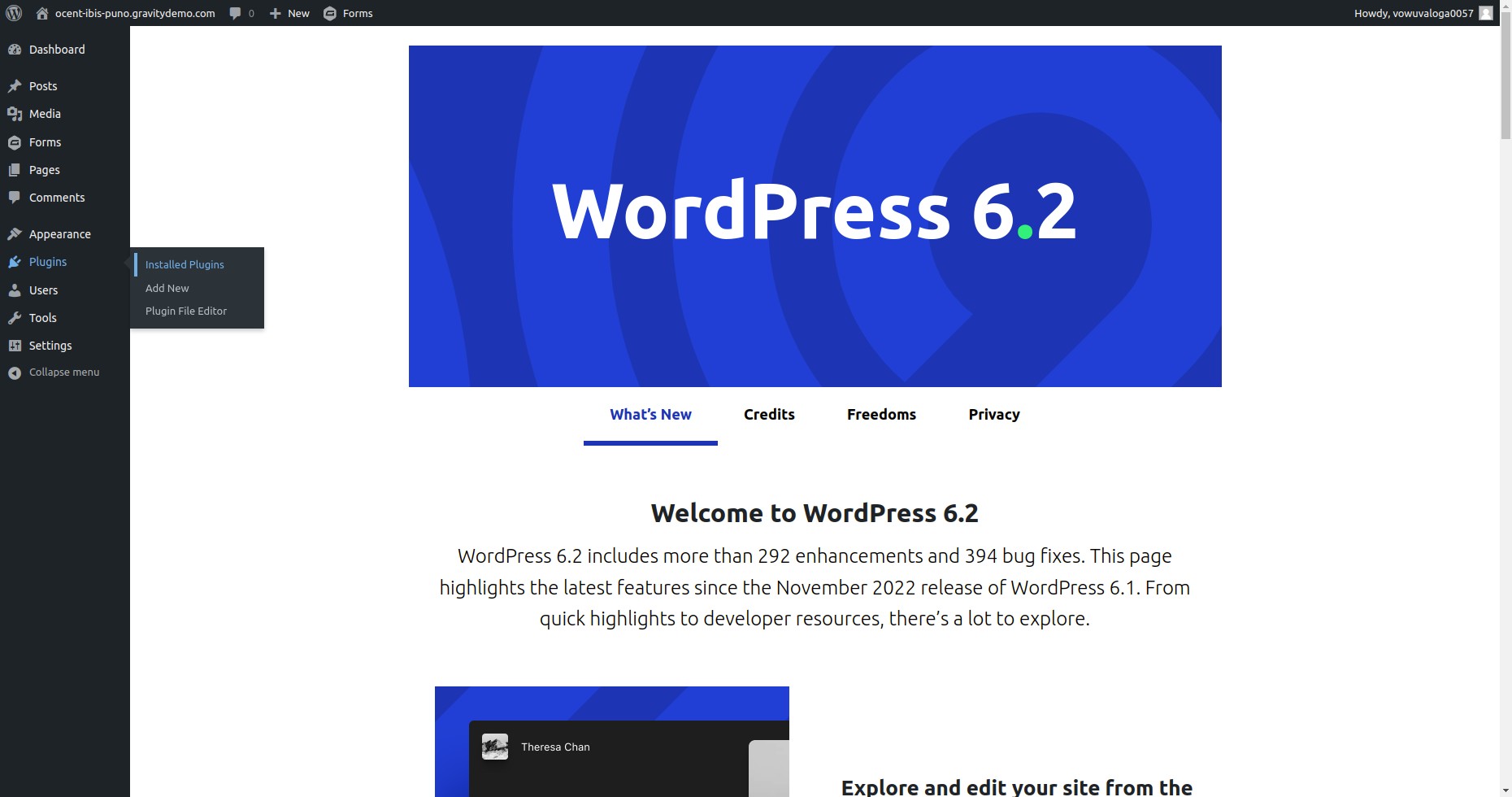
Open your WordPress admin and go to Plugins.
Click into your installed plugins area
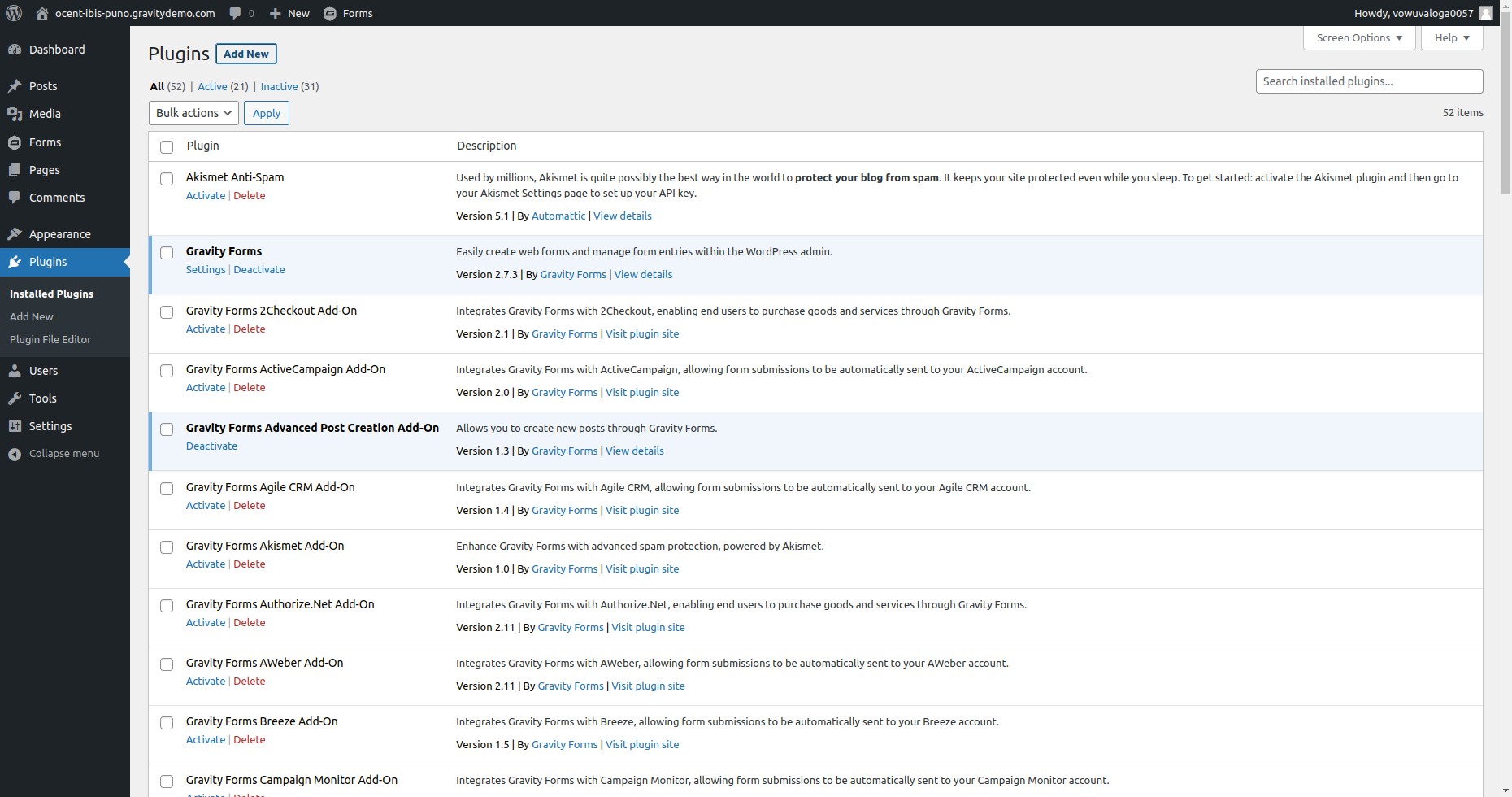
Once you are on the WordPress admin dashboard, click on “Installed Plugins“.
Choose Add New, search for the plugin, then install it
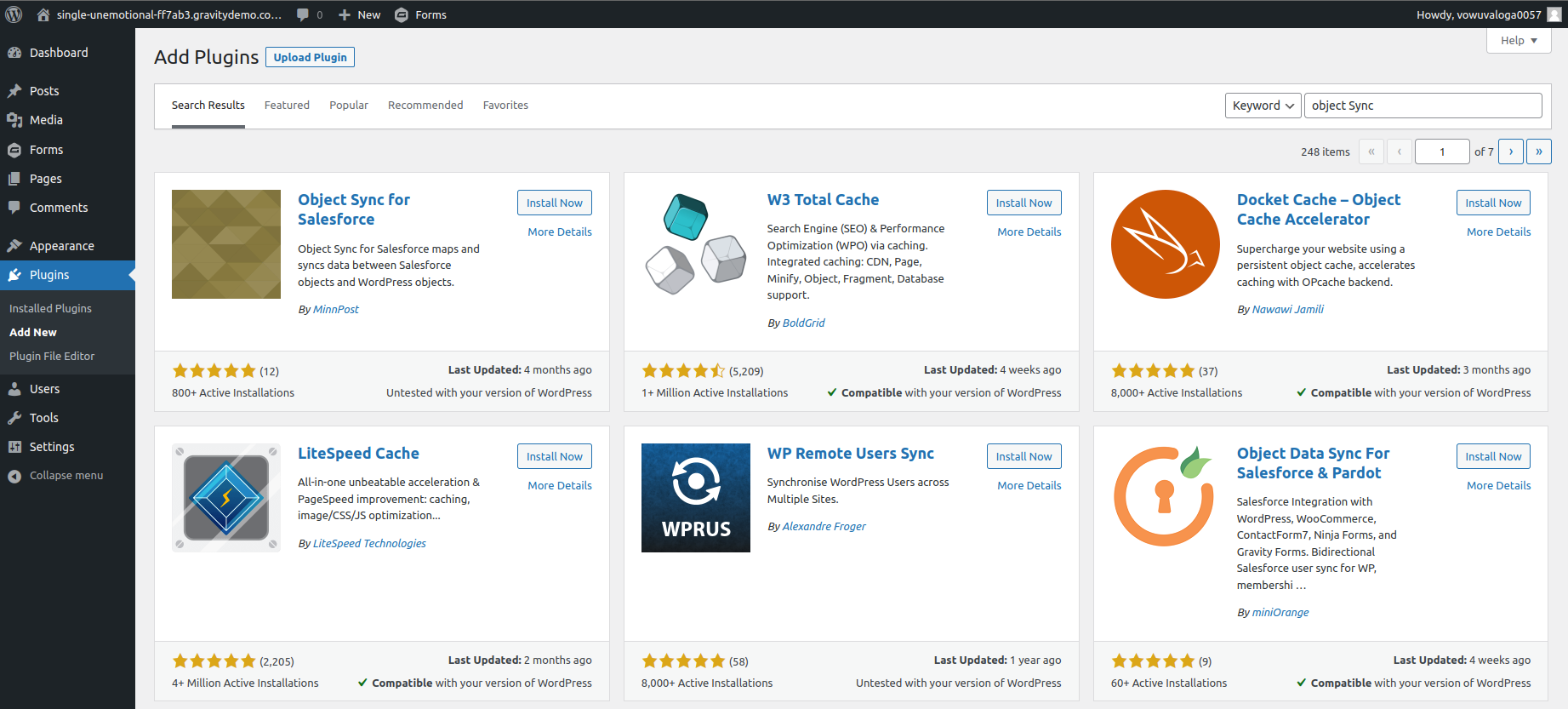
To add a new plugin, click on “Add New“. This will take you to the “Add Plugins” page.
Search “object Sync for Salesforce” plugin in search box.
Click on” Install Now” to install plugin.
Activate Plugin
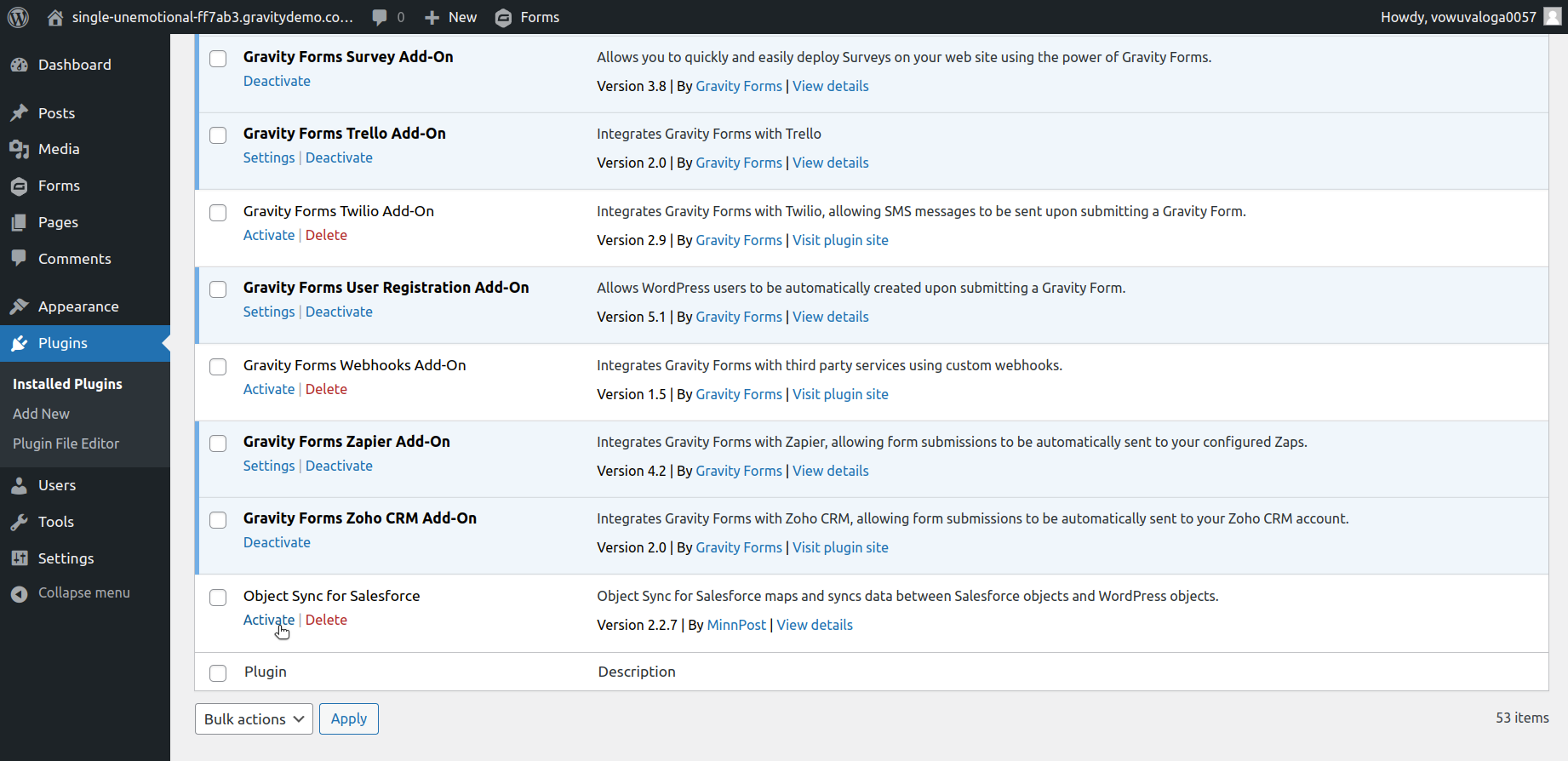
Once the plugin is installed, click on “Activate” to activate it.
2. Create a Connected App in Salesforce
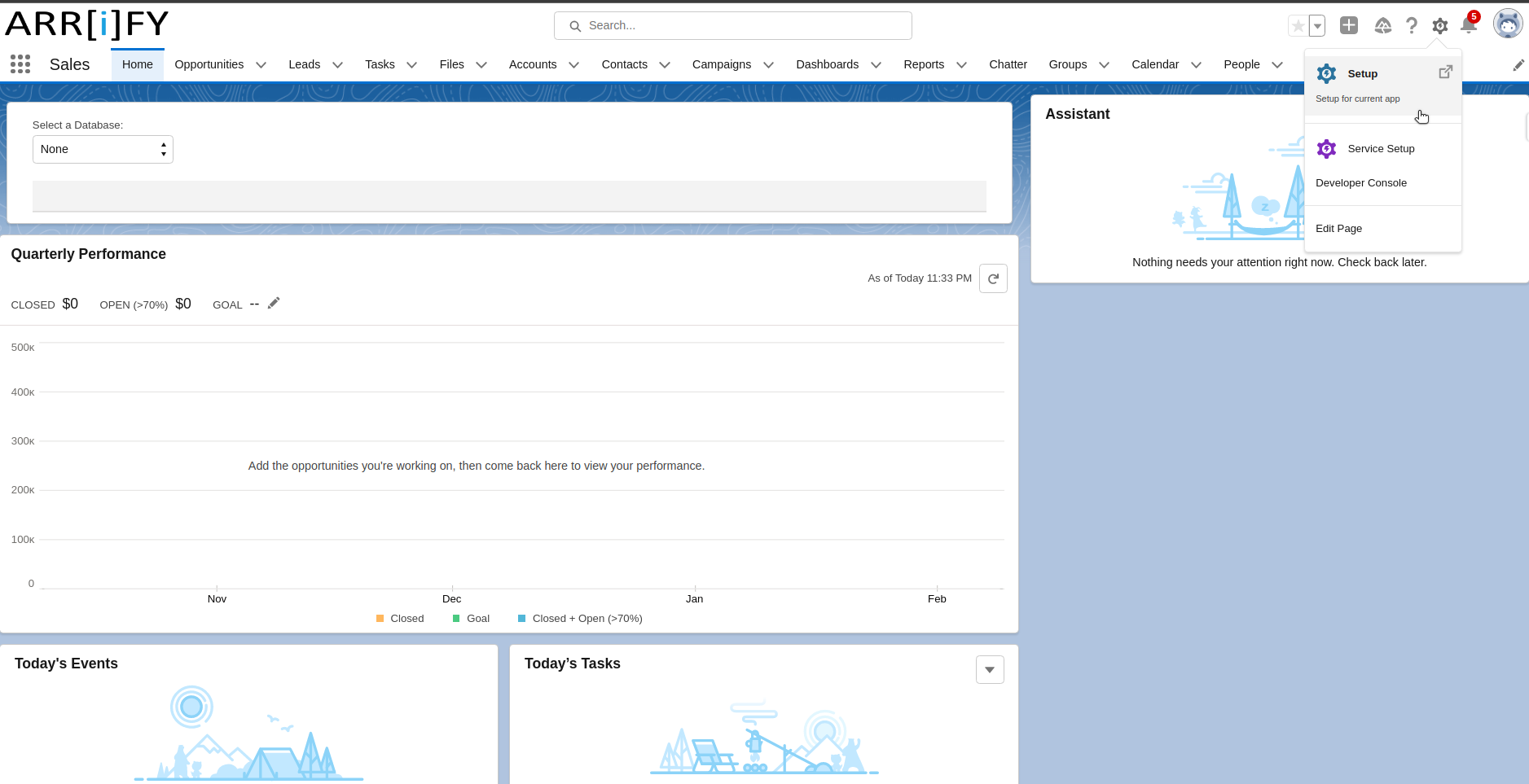
In Salesforce, click the gear icon and open Setup.
Search for App Manager
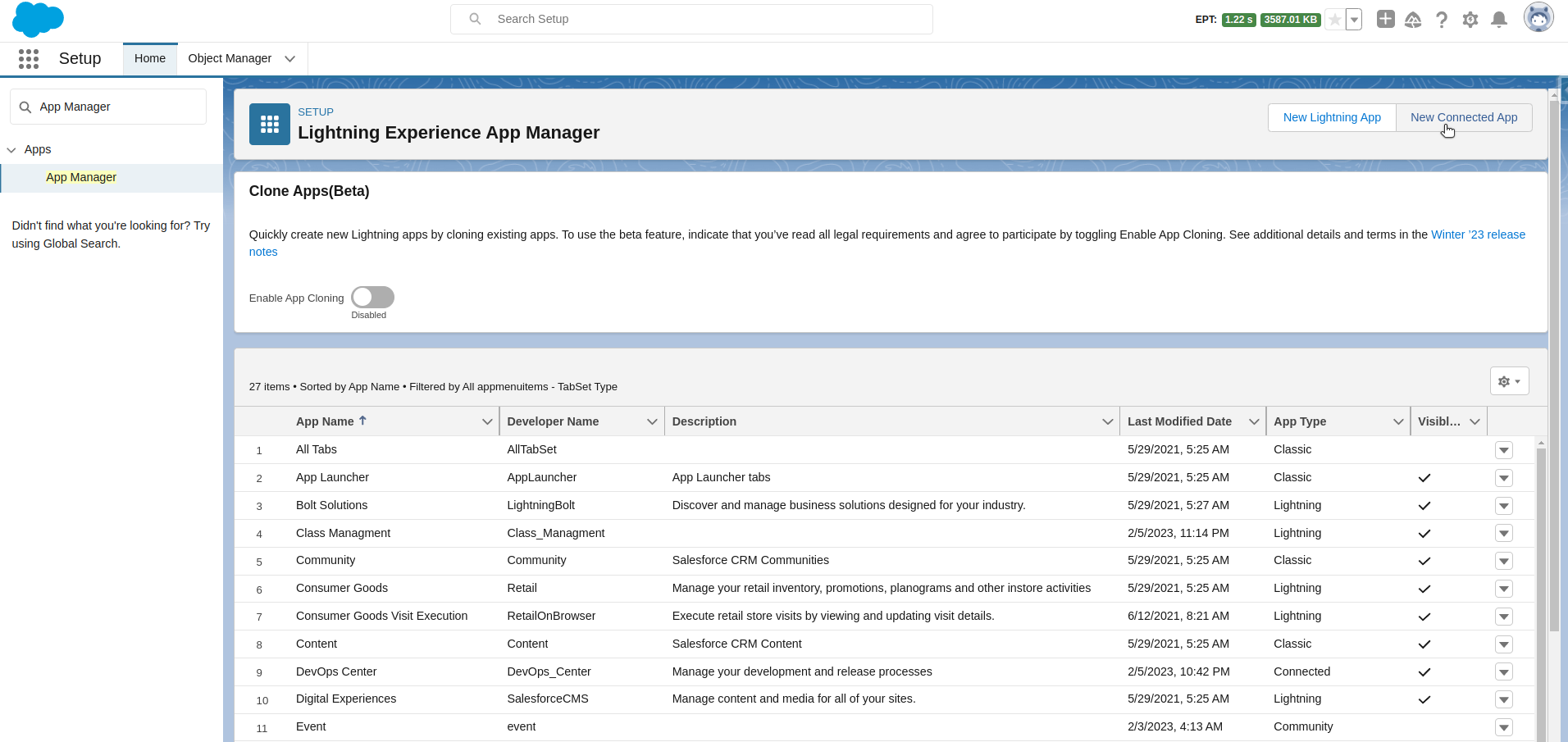
From Setup, enter “App Manager” in the Quick Find Box, and then Click on New Connected App.
Fill in the app details
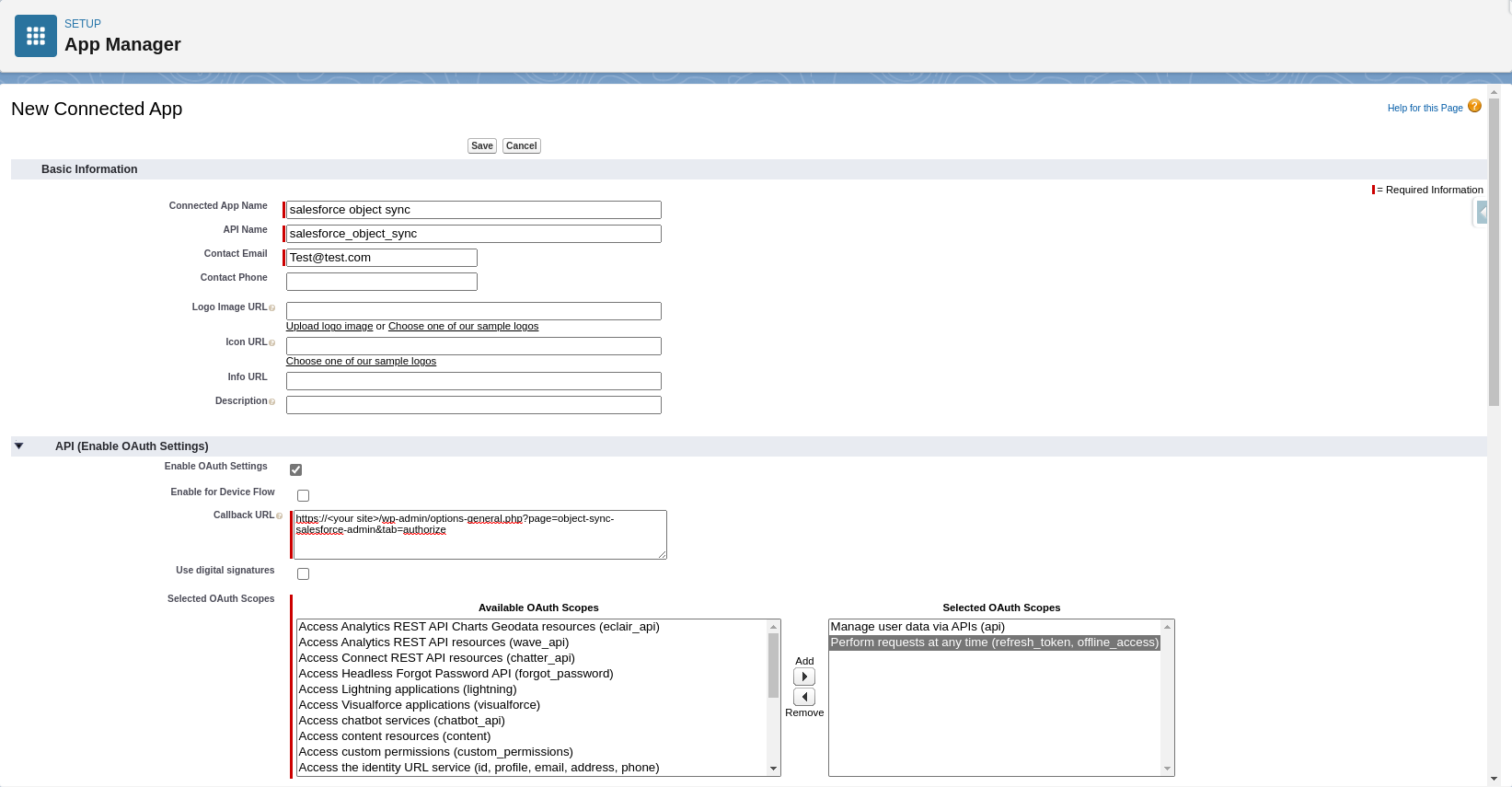
Fill basic details such as Connected App Name, Callback URL and OAuth Scopes etc. , then click on “Save“.
After saving, open the consumer details so you can copy the Consumer Key and Consumer Secret
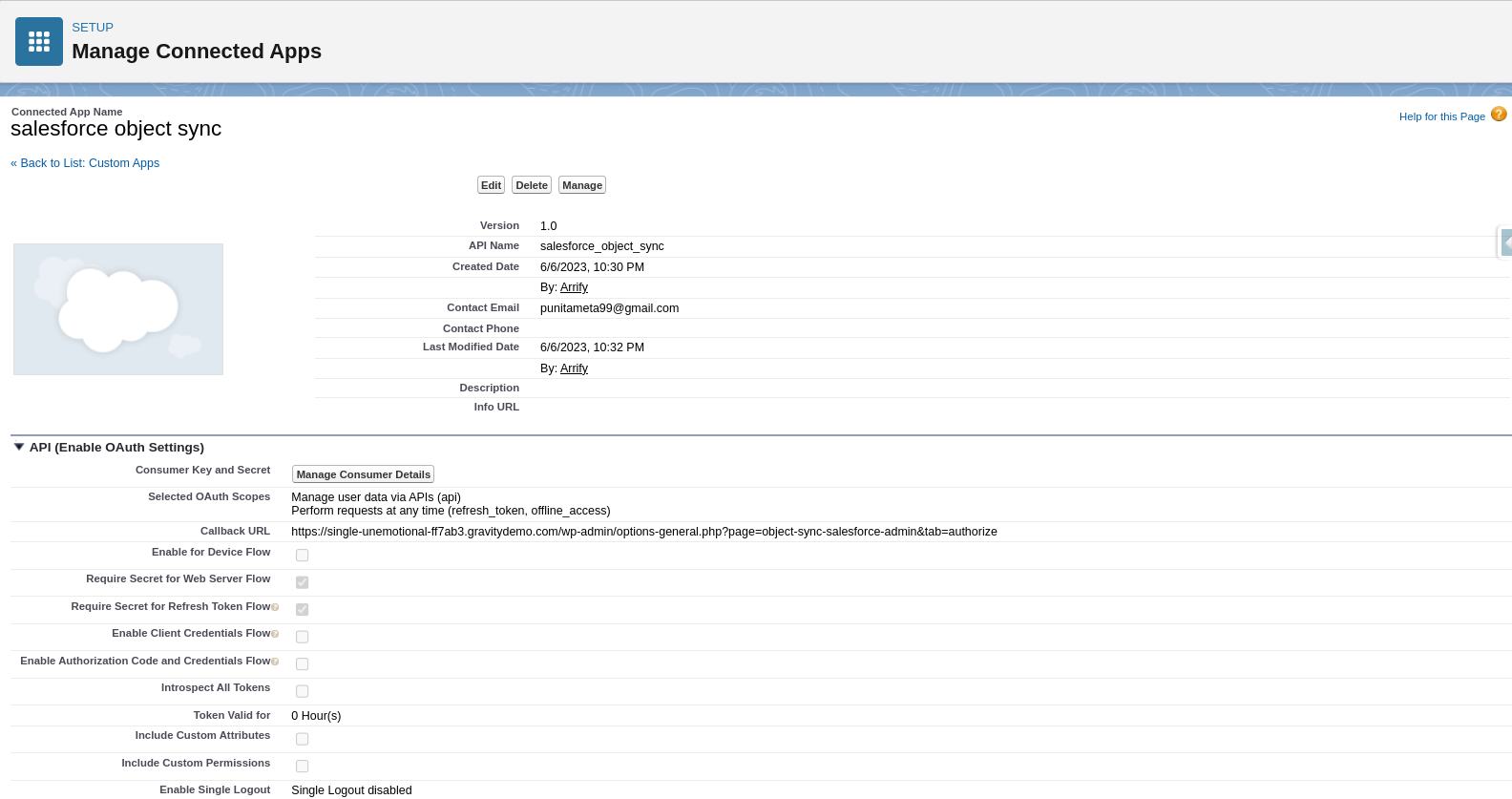
Two details matter here more than anything else:
1. Your callback URL in Salesforce must exactly match the callback URL used in the WordPress plugin
2. Your OAuth scopes need to allow the plugin to read and write the objects you’re syncing
Miss either one and authorization usually fails.
Pro Tip: Copy the callback URL directly from the plugin settings screen before creating the Connected App. Tiny mismatches are one of the most common setup mistakes.
3. Enter the Salesforce credentials in WordPress
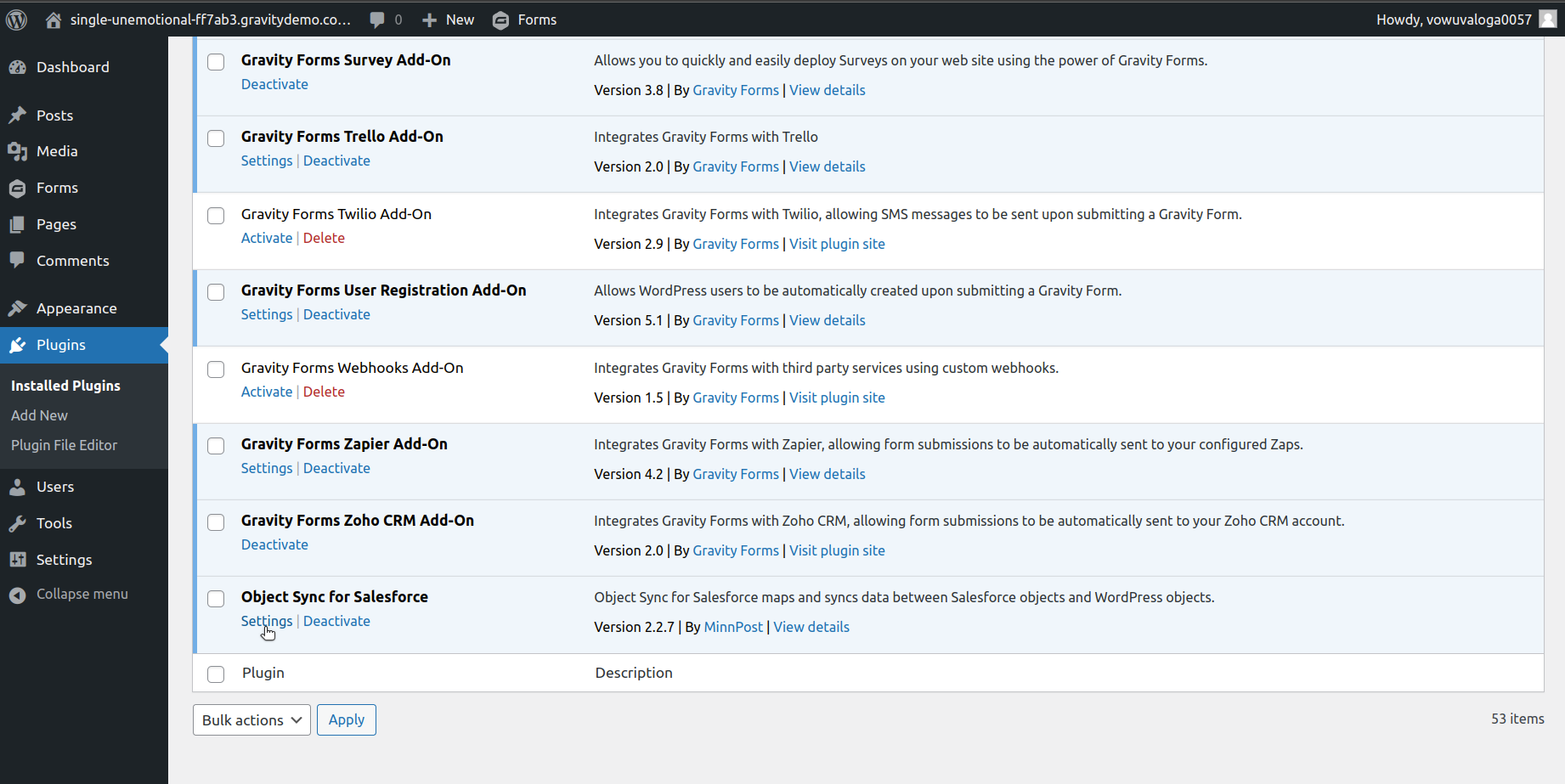
Back in WordPress, open the plugin settings and click Edit.
Configure Plugin
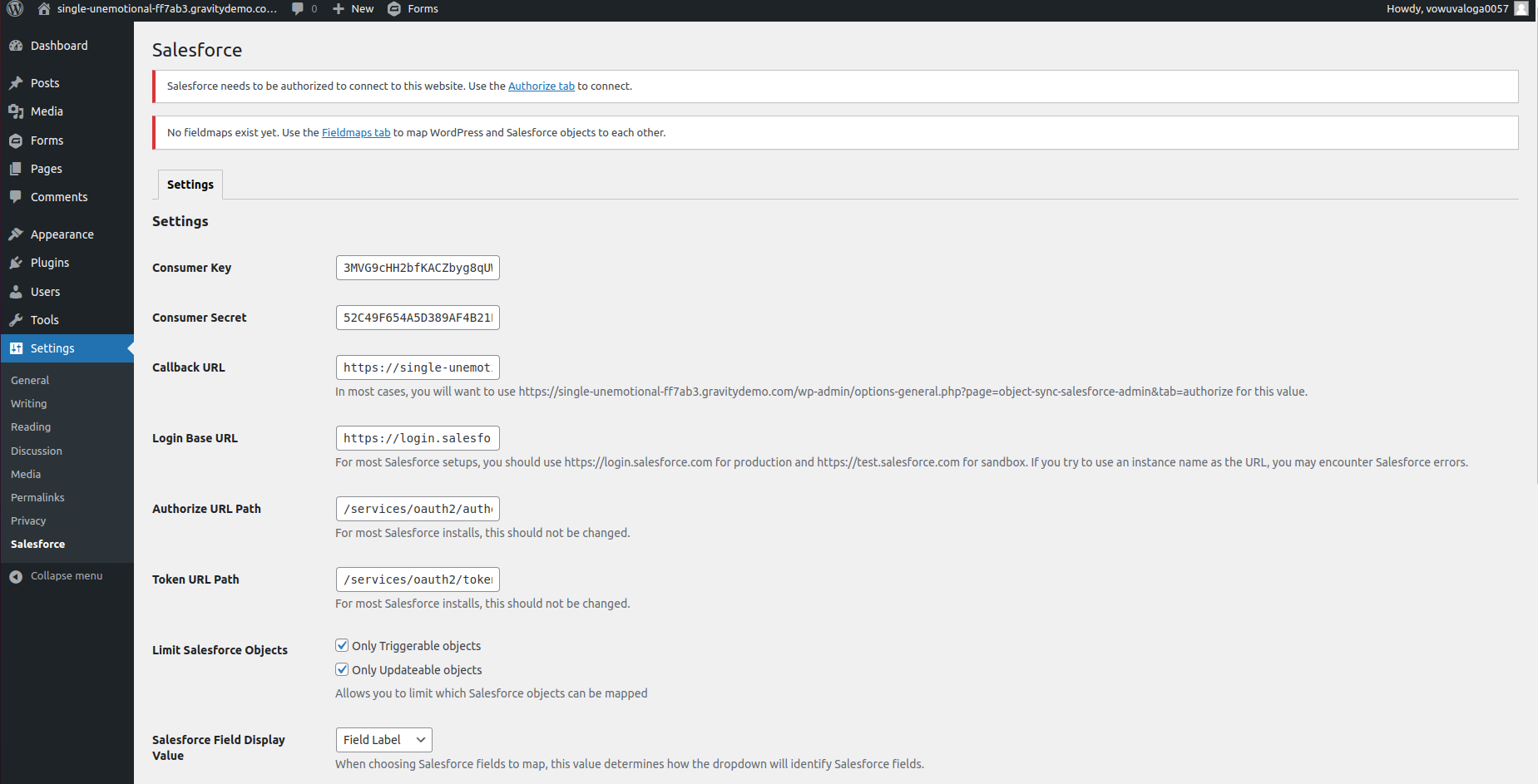
Paste in the Consumer Key, Consumer Secret, callback URL, and the correct Salesforce login base URL, then save.
If you’re using a sandbox, make sure the login URL matches the sandbox environment. Production and sandbox mix-ups waste a surprising amount of time.
4. Authorize WordPress with Salesforce
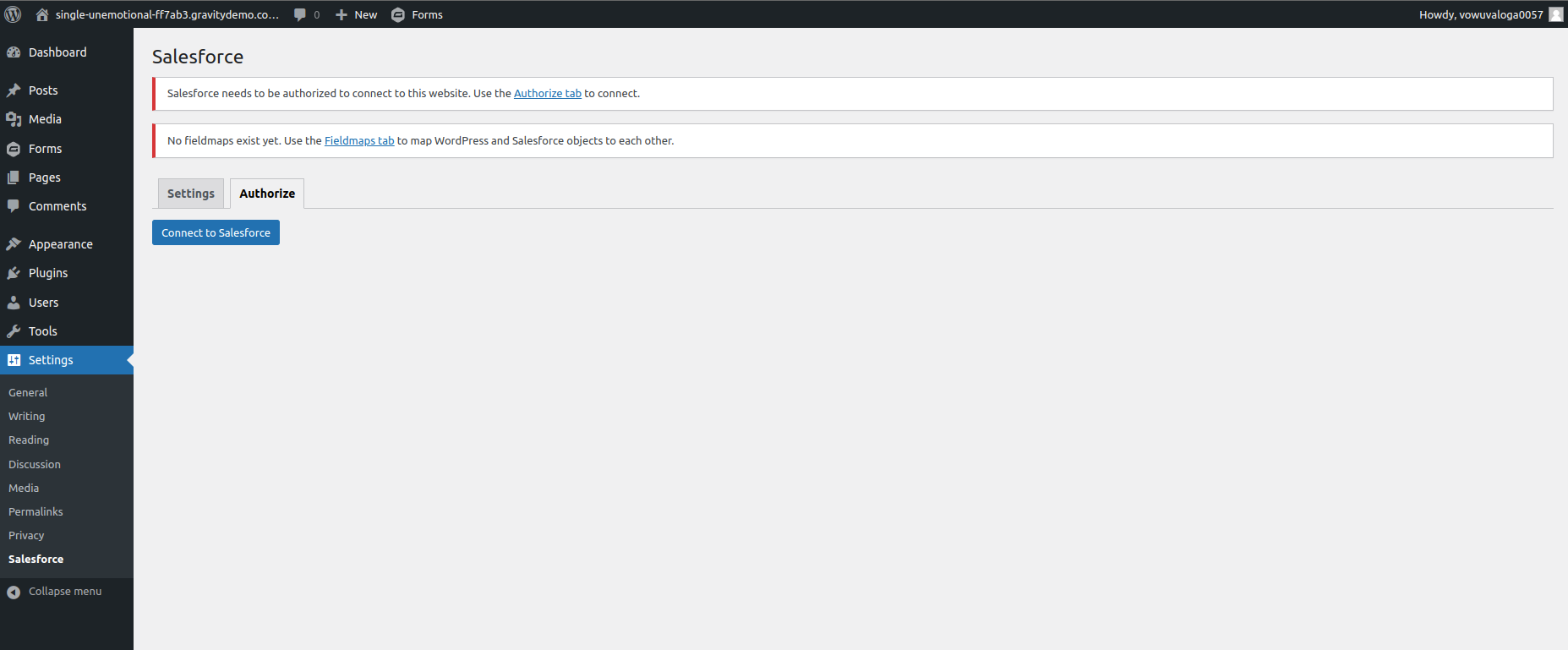
Go to the Authorize tab and connect the site to Salesforce.
Connect to Salesforce successfully
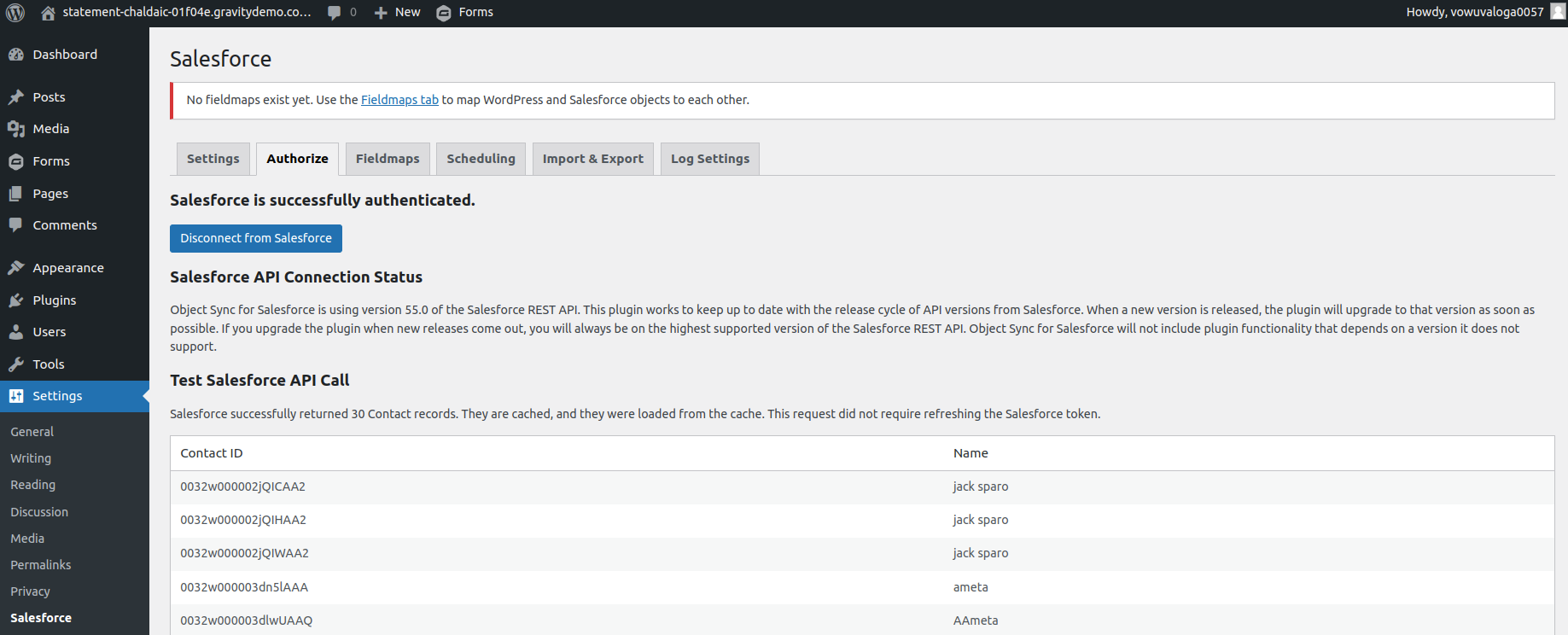
Once the connection works, the plugin should confirm it can pull records from Salesforce.
At this point, the systems can talk. You’re not done yet though. Without a field map, there is still no practical sync.
5. Create your first field map
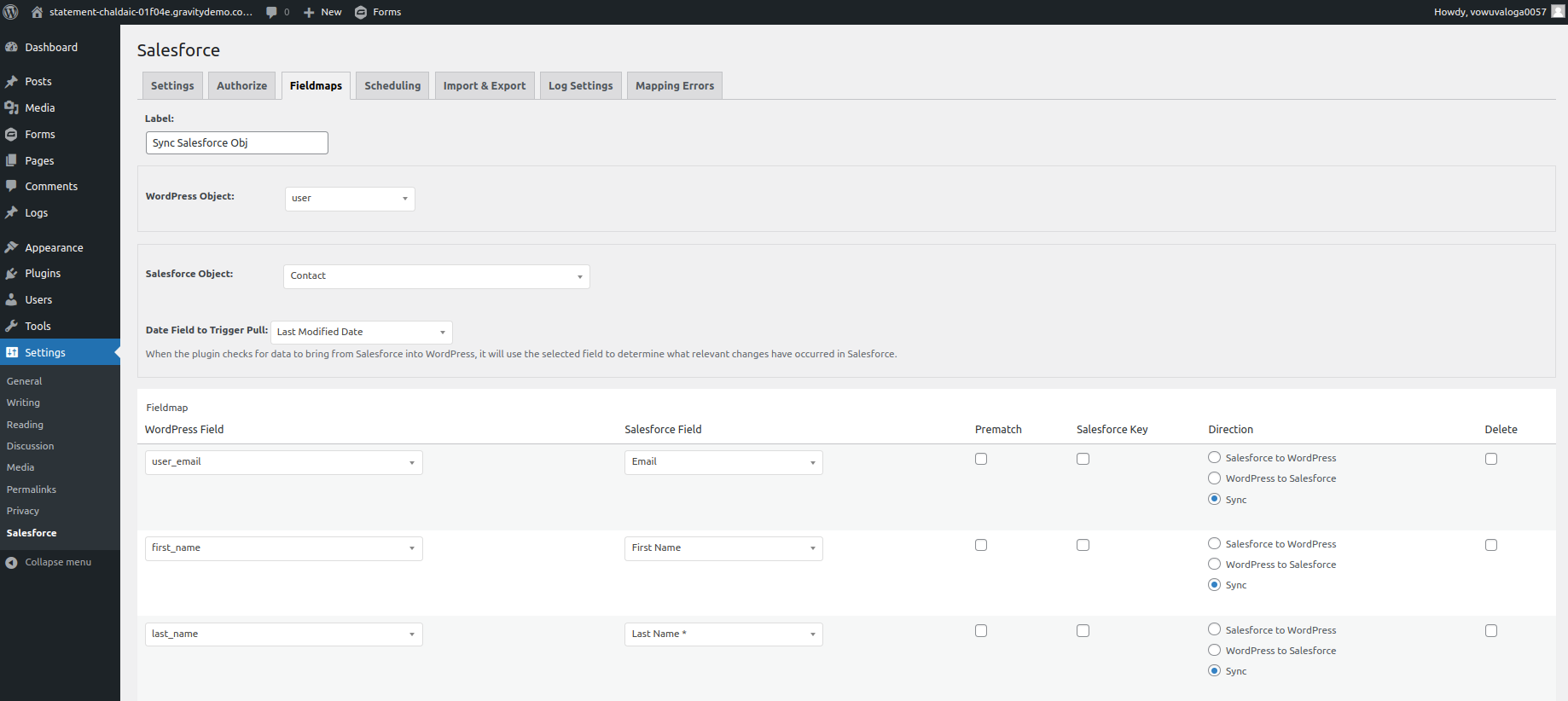
Open the field mapping screen and choose:
1. The WordPress object you want to sync
2. The Salesforce object it should map to
3. The trigger or date field used for pulls
4. The individual fields that should match on both sides
Then save the field map.
Start with one simple mapping first, usually WordPress User -> Salesforce Contact. It’s easier to test one clean path than debug a large object model all at once.
6. Test with a real record
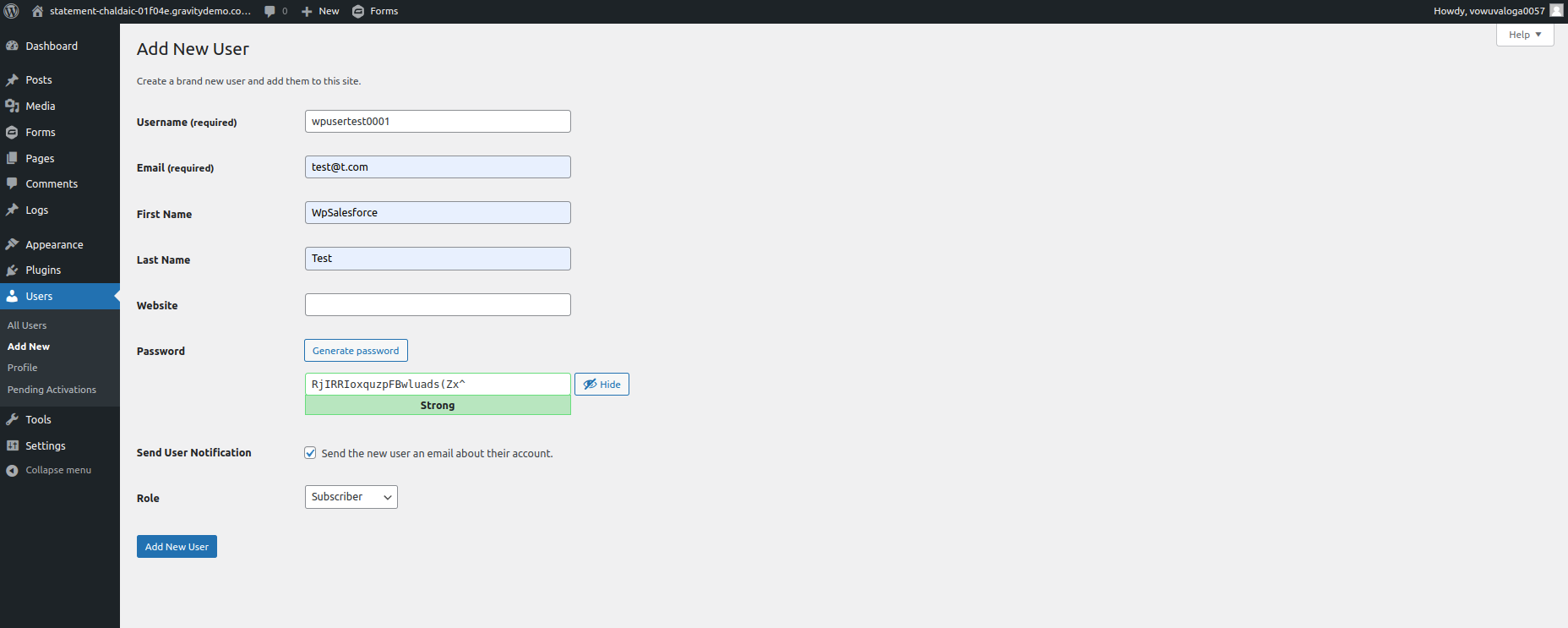
Create a new user in WordPress.
Confirm record Created
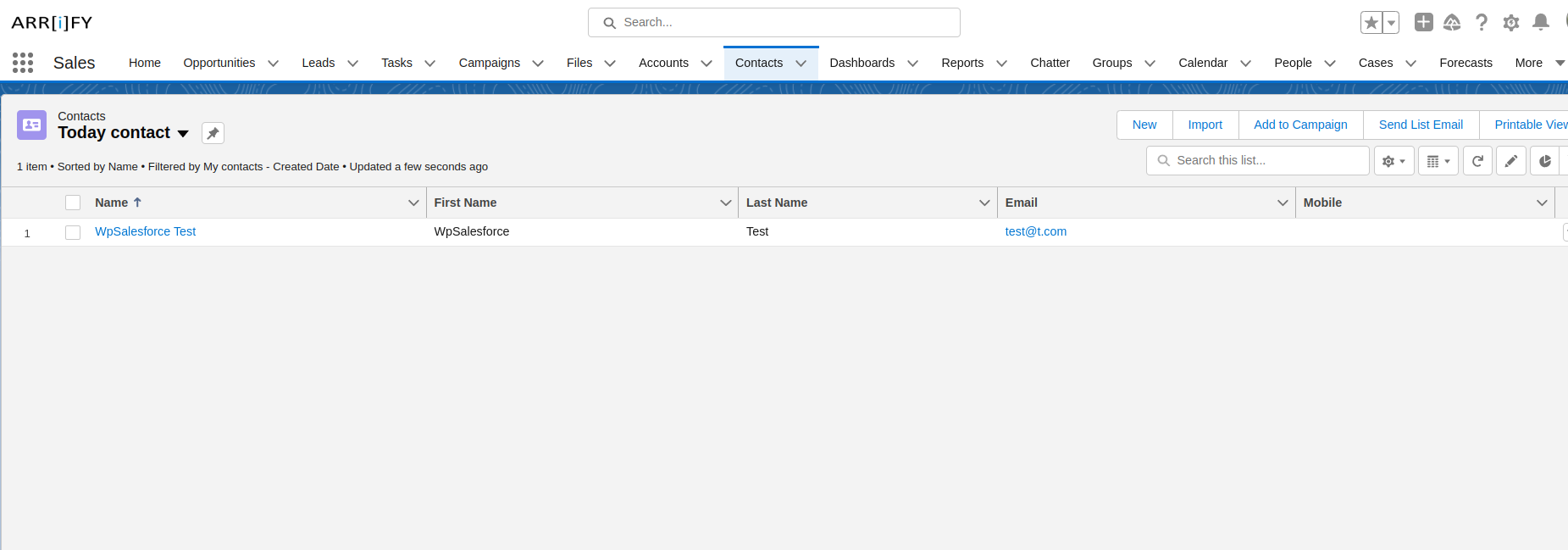
Then check Salesforce to confirm the matching record was created.
If that works, your core setup is done.
Key Takeaway: A successful authorization only proves the connection works. A successful test record proves your mapping works.
How Field Mapping Works Without Breaking Your Sync
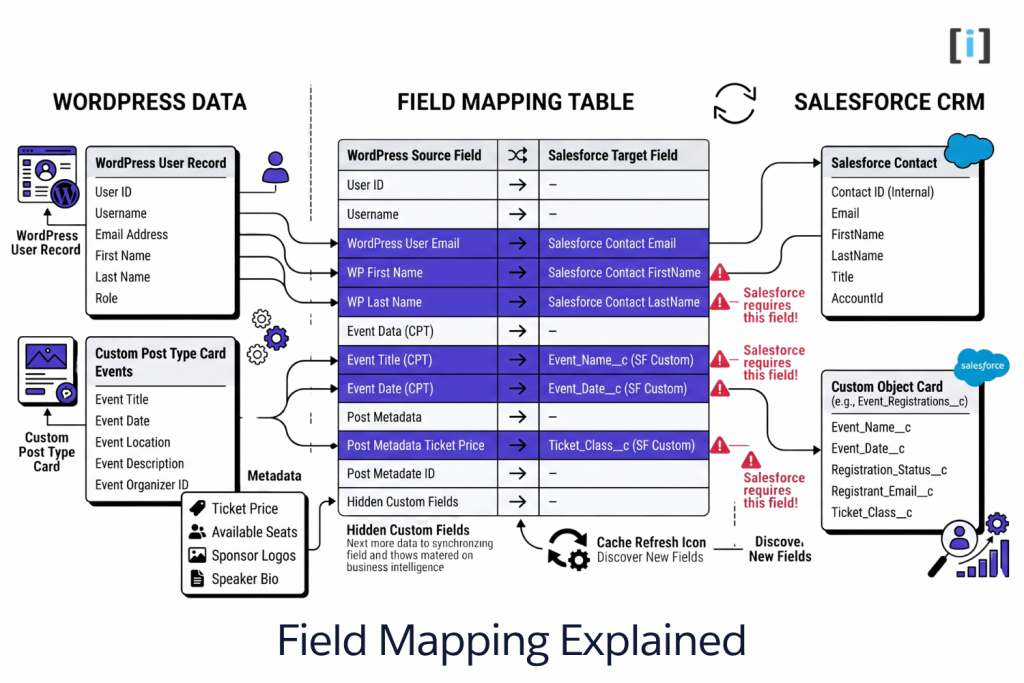
Most setup issues show up here, not during installation.
The plugin relies on field maps to tell WordPress and Salesforce how data should line up. That sounds obvious, but there are a few gotchas worth knowing before you map everything in sight.
Required fields can trip you up
If Salesforce requires a field during record creation, WordPress needs to provide that value at the right point in the save process. Some custom meta fields are not available early enough, which can cause create operations to fail even though the mapping looks correct.
Simple rule: if a Salesforce field is required, test it early with a basic object and confirm the plugin can send it during record creation.
Custom fields must already have data
For WordPress meta fields, the plugin may not show a field in the mapper until at least one record already has a value stored in the database. If you create a brand-new custom field and don’t see it in the field map, that may be the reason.
If the field was added after the plugin loaded its cache, clear the plugin cache and reload the mapper.
Pre-existing data is a separate job
This plugin is best at syncing records created or updated after setup. If you need to backfill old WordPress or Salesforce data, treat that as an import project, not a normal day-one sync expectation.
Keep the first map boring
For your first pass:
- Avoid complex relationships
- Avoid custom required fields
- Avoid syncing multiple objects at once
- Prove one simple map works first
Pro Tip: Don’t start with Accounts, Opportunities, and custom junction logic on day one. Start with Contacts or a single custom object, then expand.
If your use case is mostly form submissions rather than object sync, How to Connect Gravity Forms to Salesforce or 5 WordPress Forms Compatible with Salesforce may be a better fit.
Common Problems and How to Fix Them
Here are the issues that come up most often with a WordPress Salesforce sync setup like this one.
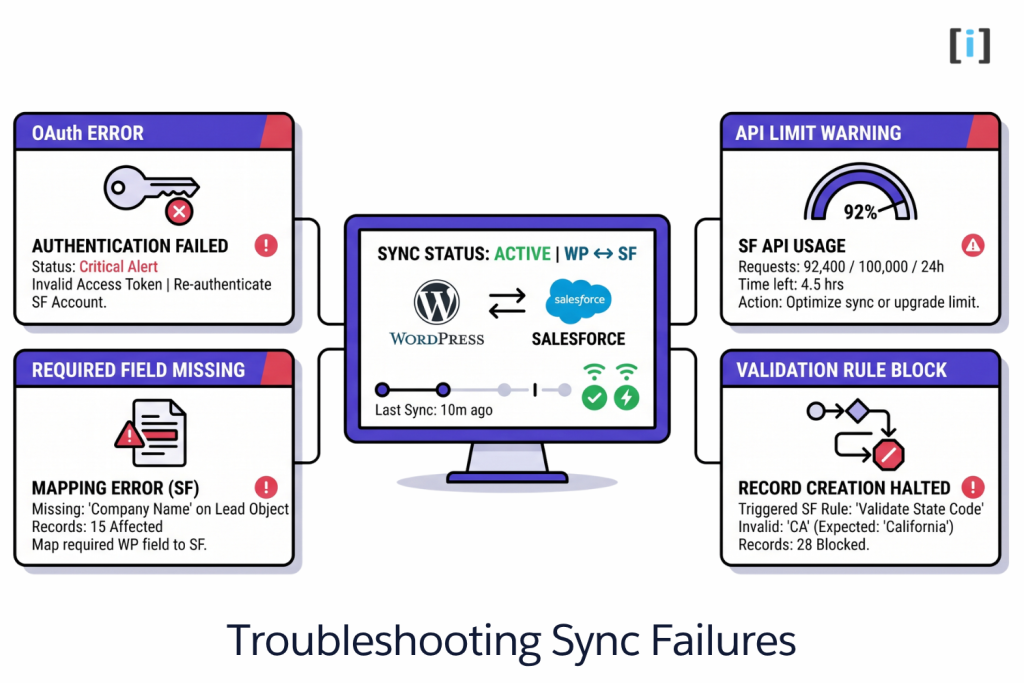
Authorization fails
Check these first:
- Callback URL mismatch between Salesforce and WordPress
- Wrong login URL for sandbox vs production
- Consumer Key or Consumer Secret pasted incorrectly
- OAuth scopes too limited
Records don’t create even though the connection works
Usually this means one of two things:
- Your field map is incomplete or mapped to the wrong Salesforce object
- A required Salesforce field is missing at create time
Custom field doesn’t appear in the mapper
That usually means the field has no saved value yet, or the field list is cached. Add a value to at least one record, then clear the plugin cache and reload.
Old records don’t sync automatically
That’s expected. This plugin is strongest with new and updated records after setup. Backfilling historical data typically needs an import or export workflow.
Sync seems inconsistent
Look at the boring stuff first:
- SSL issues
- Salesforce API limits
- Other plugins changing save behavior
- Object triggers or validation rules in Salesforce blocking the write
Key Takeaway: If the plugin connects but the sync fails, the problem is usually field mapping, required fields, or Salesforce-side validation, not the installation itself.
When This Plugin Is a Good Fit and When It Isn’t
This plugin is a strong fit when you want free, flexible, object-level syncing and you don’t mind a slightly technical setup.
It’s a good fit if:
- You need bi-directional sync
- You’re syncing users, posts, or custom post types
- You have a developer or technical admin available
- You want an open-source plugin instead of a paid SaaS connector
It’s probably not the best fit if:
- You only need a lead form sent to Salesforce
- You want built-in WooCommerce-specific support
- You need a polished commercial onboarding experience
- You need a one-click bulk migration tool with less manual setup
Real Talk: This plugin is better for technical teams than for pure no-code marketing teams. It can absolutely work, but it rewards people who are comfortable reading settings screens carefully.
If you want a broader comparison of plugins, go to Best WordPress Salesforce Plugins: 8 Options Compared. If you need to decide between plugin, API, and custom integration routes, use WordPress Salesforce Integration: Plugins, API, and Custom Methods Compared.
FAQ
Is this plugin bi-directional?
Yes. The plugin is designed to sync data between WordPress and Salesforce objects in both directions, depending on how your field maps and triggers are configured.
Can I sync custom objects?
Yes, in many cases. The plugin supports mapping supported WordPress object types to standard or custom Salesforce objects, but the mapping needs to be planned carefully.
Does it work for pre-existing records?
Not as smoothly as it works for new or updated records after setup. If you need historical data synced, plan an import or migration step.
Is this the same as a WordPress form to Salesforce plugin?
No. This is closer to a WordPress Salesforce sync tool than a basic form connector. If you only want form submissions pushed into Salesforce, a dedicated form integration plugin is usually simpler.
What if I just need one object sync and some custom logic?
That is often the point where a custom integration becomes cleaner than stretching a plugin. If your data model has special rules, related record creation, or non-standard transforms, custom work may save time in the long run.
Still not sure which WordPress-to-Salesforce route fits your setup? Start with our plugin comparison guide if you’re evaluating tools, or our integration guide if you’re deciding between plugins, APIs, and custom builds.
We build and clean up integrations when plugins stop being enough. Talk to Arrify →