
If you are here, you probably already know what Salesforce is and why CRM is essential for modern organizations. But what many teams don’t realize is just how much Salesforce can do beyond basic contact storage or deal tracking.
Salesforce is a comprehensive cloud platform designed to streamline operations, align teams, and accelerate revenue. Whether you are new to the ecosystem or looking to get more value out of your investment, this guide explores 7 amazing ways to use Salesforce to work smarter, eliminate manual overhead, improve your productivity and drive consistent business growth.
How to Use Salesforce Effectively in Your Business
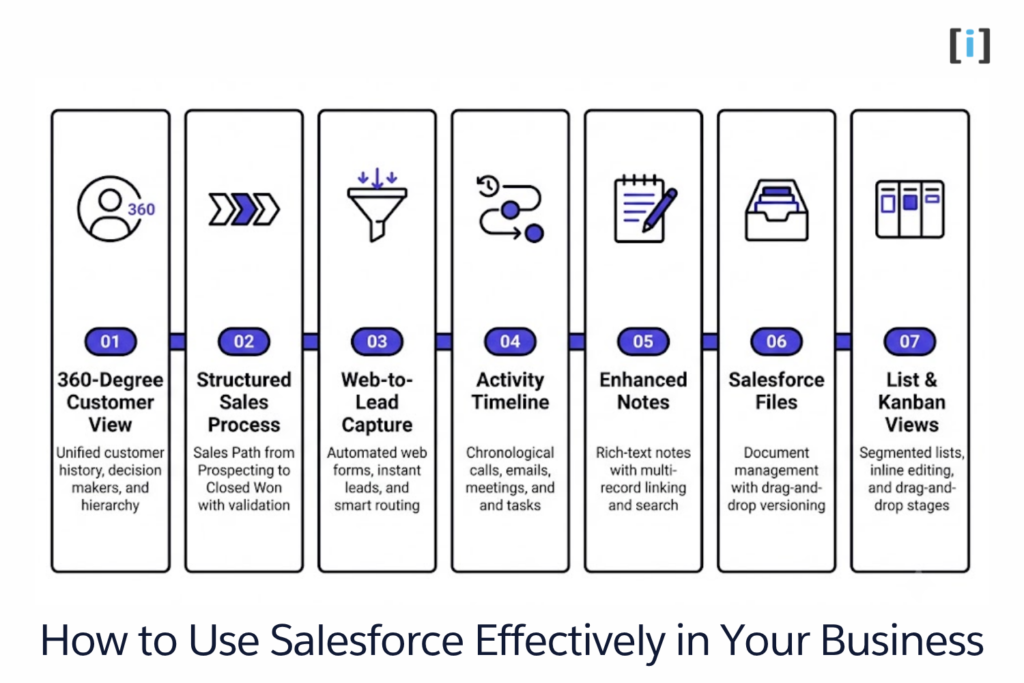
Before diving into specific features, it helps to understand the bigger picture: Salesforce is not merely a digital address book—it is a central operational hub connecting your sales, marketing, customer service, and operations teams.
When properly configured, Salesforce delivers:
- A Single Source of Truth: Unifies customer conversations, transactions, and preferences across departments.
- Cross-Department Collaboration: Allows support agents, account executives, and marketing specialists to view the same customer timeline.
- Scalable Automation: Replaces tedious administrative tasks with automated workflows and system intelligence.
Let’s explore the top 7 practical ways to unlock the full potential of Salesforce.
1. Get a True 360-Degree View of Your Customers
A 360-degree customer view means seeing your customer’s complete journey in one centralized location from their very first website visit to their latest support ticket and renewal conversation.
When you open an Account or Contact record in Salesforce, you instantly see:
- Interaction History: Complete records of past calls, emails, meetings, and notes.
- Marketing Engagement: Campaigns viewed, webinars attended, and whitepapers downloaded.
- Key Decision Makers: Organizational charts, executive sponsors, and buying roles.
- Account Hierarchy: Parent companies, subsidiaries, and related business units.
- Tech Stack & Industry Details: Sub-industry classification, technologies currently used, and annual revenue.
💡Modern Productivity Tip:
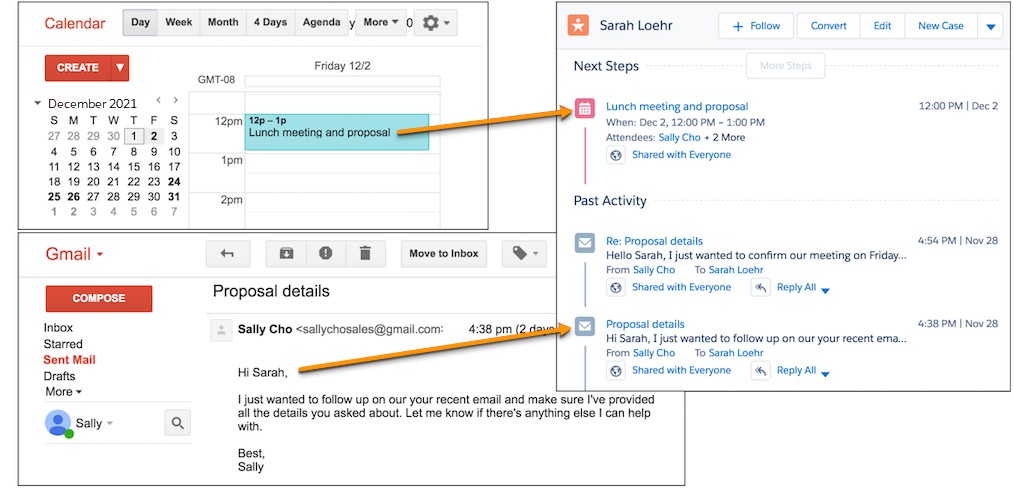
You don’t have to enter this data manually. Tools like Einstein Activity Capture and the Salesforce Outlook / Gmail Integration automatically log emails, calendar events, and attendee details directly to the relevant Contact and Opportunity records.
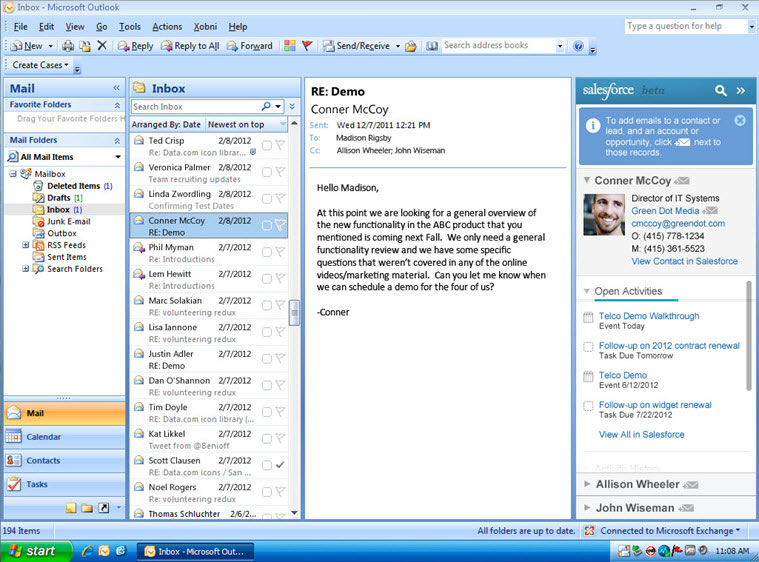
Why This Matters:
Instead of asking colleagues for updates or digging through email threads, your team gets instant context. You can see customer satisfaction levels, ongoing issues, and upcoming opportunities in seconds, making every interaction personalized and productive.
2. Set Up a Structured Sales Process to Win Deals
Every business relies on closing deals consistently. In Salesforce, deals are tracked using the Opportunity object. An opportunity represents a potential sale, and with a well-structured sales process guides reps step-by-step from initial discovery all the way to Closed Won.
With Salesforce Sales Path, you can:
- Define clear stages (e.g., Prospecting, Qualification, Proposal/Price Quote, Negotiation, Closed Won).
- Provide Guidance for Success at each stage (tips, scripts, checklists, and required fields).
- Enforce validation rules (e.g., requiring a Lost Reason such as competitor or pricing before marking a deal Closed Lost).
For example
- Before marking a deal as Closed Won, you might require the customer’s delivery address, payment terms, or final approval details.
- If a deal is Closed Lost, you may want to capture the reason such as high pricing, a stronger competitor, lack of decision-maker access, or any other challenge.
The Stage field on an Opportunity shows exactly where the deal currently stands. Your custom sales process controls which stages appear and in what order. Different types of deals can even have different sets of stages.
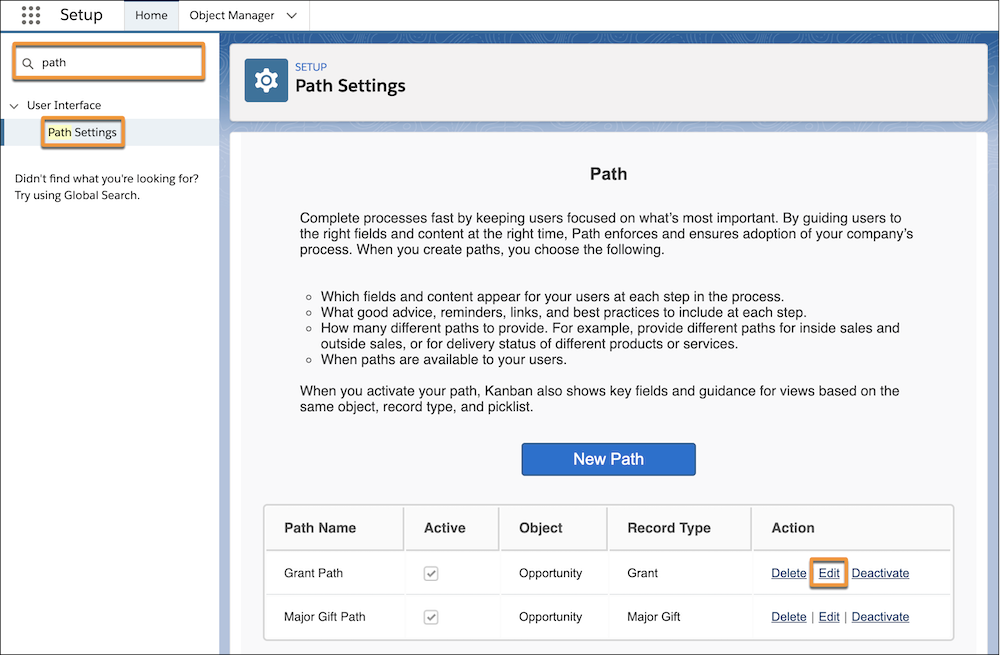
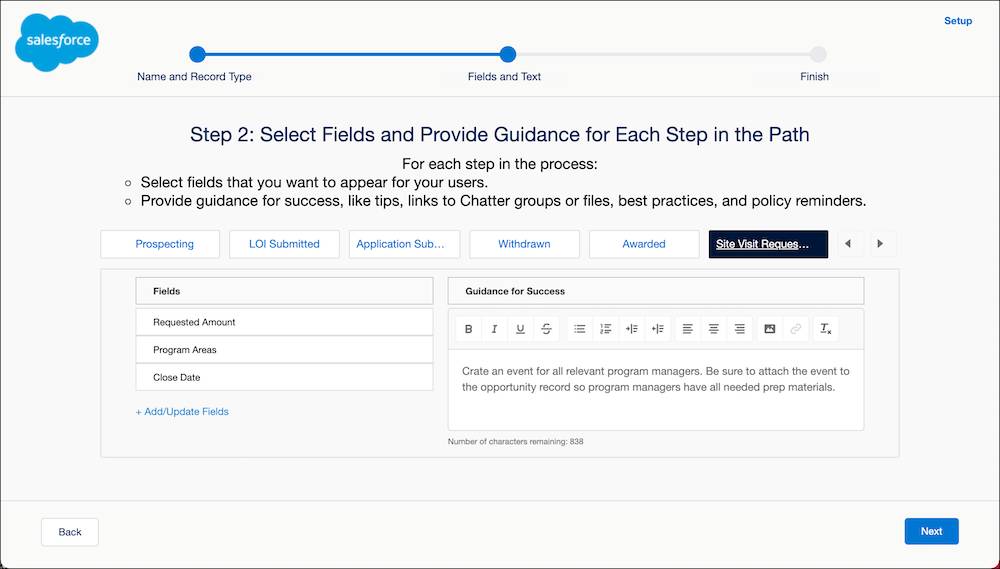
Why This Matters:
A clear sales process helps you understand your entire pipeline at a glance:
- Are you still in the early discussion phase?
- Is the quote shared but not yet accepted?
- Has the customer gone silent?
- Did you lose the deal to a competitor?
Key Benefits:
- Pipeline Visibility: Instantly identify whether deals are progressing or stagnating.
- Consistent Execution: Ensure new reps follow proven sales methodologies.
- Automated Alerts: Notify managers or trigger reminders when high-value opportunities remain inactive for too long.
3. Web-to-Lead: Capture Leads from Your Website into Salesforce
Manually copying contact inquiries from emails into your CRM is slow and prone to errors. With Web-to-Lead, Salesforce automatically generates a lead record whenever a prospect submits a form on your website (such as Contact Us, Request a Demo, or Get a Quote).
How It Works:
- Prospect Submits Form: A visitor fills out their contact details on your website.
- Instant Record Creation: Salesforce immediately creates a structured Lead record.
- Automated Follow-up: An auto-response email is sent acknowledging the request within seconds.
- Smart Lead Assignment Rules: Salesforce routes the lead to the right team member based on criteria such as territory, industry, or product interest.
📌 Key Advantage: Fast lead response time is one of the highest predictors of conversion. Automated capture and routing ensure no high-intent lead falls through the cracks.
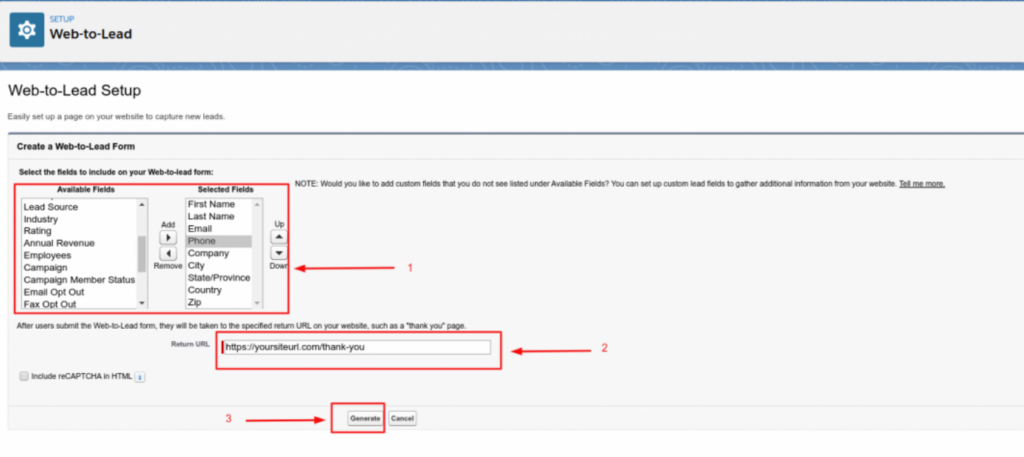
The Best Part? Smart Lead Assignment:
Salesforce can automatically route leads to the right person based on rules you set. For example:
- Leads from New York go to the New York sales rep
- High-value companies go to your enterprise team
- Leads from a specific product page go to the product specialist
- Support-related inquiries go straight to the service team
Everything happens in the background, without you lifting a finger. This ensures faster follow-ups, fewer delays, and a much better experience for the customer.
4. Master the Activity Timeline for Seamless Collaboration
When viewing any Lead, Contact, Account, or Opportunity record, you’ll find the Activity tab. This is where you can see every interaction connected to that record, neatly arranged in the Activity Timeline.
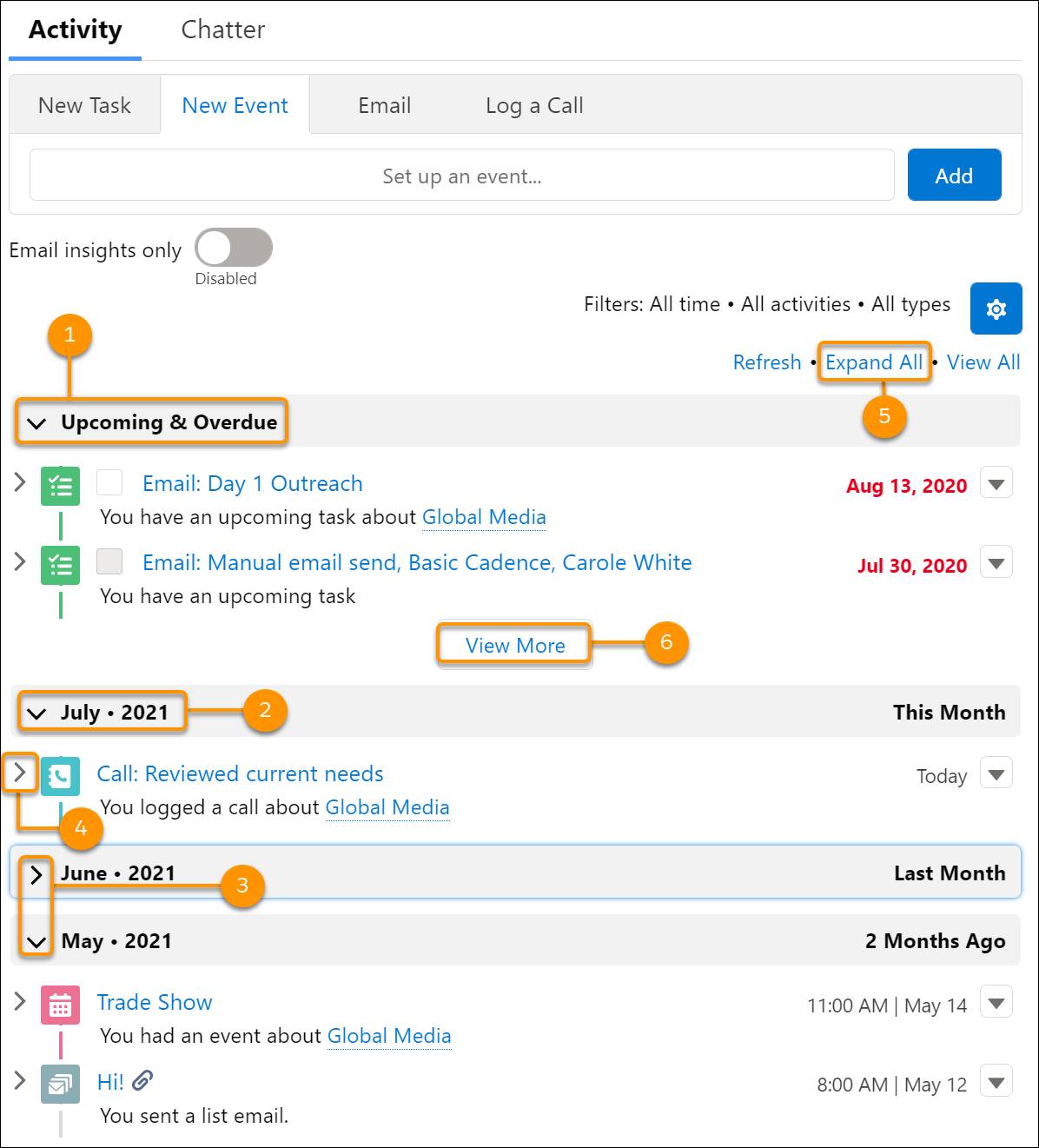
Features of the Activity Timeline:
The first thing you notice is that the activity timeline is divided into :
- Upcoming & Overdue (1)
- Past months (2)
So you can see what’s planned and what’s already happened. You can expand and close a month by clicking the buttons (3).
You can expand or collapse months to keep things clean and easy to read. If you want more details about any specific activity, simply click the expand icon (4) next to it. And if you prefer to see everything at once, you can use the Expand All (5) option. The View More (6) button lets you load additional upcoming tasks or events when needed.
You can think of the Activity Timeline as your personal assistant’s notebook. It tracks:
- Calls you made
- Emails you sent
- Meetings you completed
- Tasks you planned
- Follow-ups you scheduled
And it does all this automatically.
Why Teams Love It:
The Activity Timeline acts as a shared institutional memory. If an account executive goes on leave or an account is reassigned, the new owner can review the complete relationship history within minutes.
5. Take Rich Notes on the Fly with Salesforce Enhanced Notes
Capturing quick thoughts, meeting notes, and action items during customer calls is critical. Salesforce provides Enhanced Notes, a modern note-taking tool built directly into Lightning Experience.
How to Use Notes:
- Create Anywhere: Launch a new note from the Global Actions menu
(+), the bottom Utility Bar, or directly from a record’s Notes related list. - Rich-Text Formatting: Use bold text, bulleted lists, numbered steps, and embedded images.
- Multi-Record Association: Relate a single meeting note to multiple records (e.g., link one note to both the Contact and the associated Opportunity).
- Global Search: Find any specific discussion point later using Salesforce’s global search.
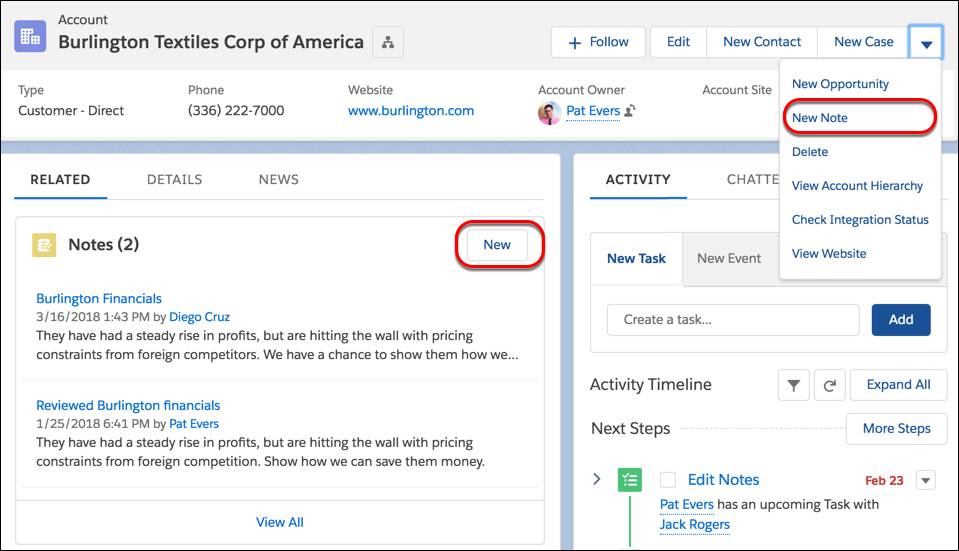
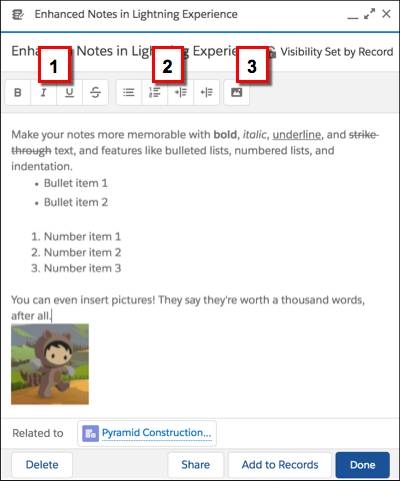
You might also see a dedicated Notes item in the navigation bar, making it easy to access all your notes in one place.
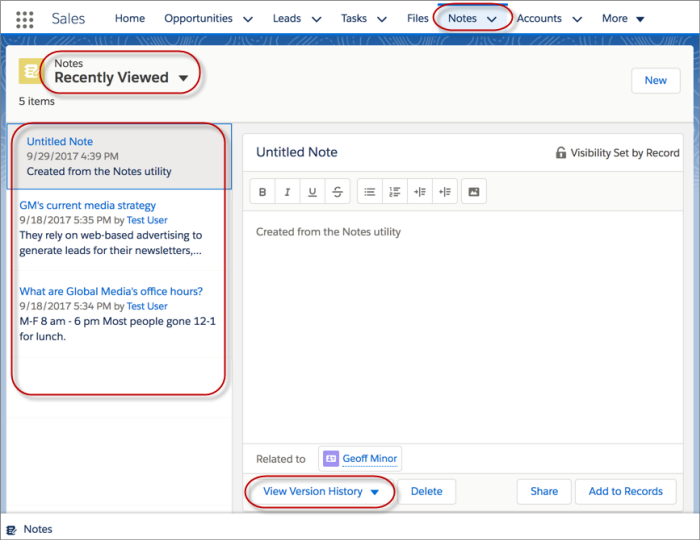
Why you’ll love this?
Notes are especially useful during customer calls or meetings. If a customer mentions that they’re planning to expand next quarter, or they’re unhappy about a shipping delay, you can instantly record it. These notes stay attached to the customer’s record forever, so anyone on your team can look back and understand the context with zero confusion.
6. Centralize and Collaborate with Salesforce Files
Scattered proposals, outdated contracts, and buried email attachments slow down deals. Salesforce Files unifies all your documents into a secure, searchable library directly connected to CRM records.
Key Capabilities:
- Drag-and-Drop Upload: Drop files directly onto any record to attach them instantly.
- Version Control: Upload new revisions without breaking existing links or creating confusing duplicates (
proposal_v1,proposal_final, etc.). - File Previews & Sharing: Preview PDFs, presentations, and spreadsheets in-browser, and manage viewer/collaborator permissions.
- Cloud Storage Integration: Connect external storage providers (Google Drive, Microsoft SharePoint, Box) via Files Connect so documents remain synced with Salesforce records.
You can upload files directly to any record simply by dragging them into the Files related list.
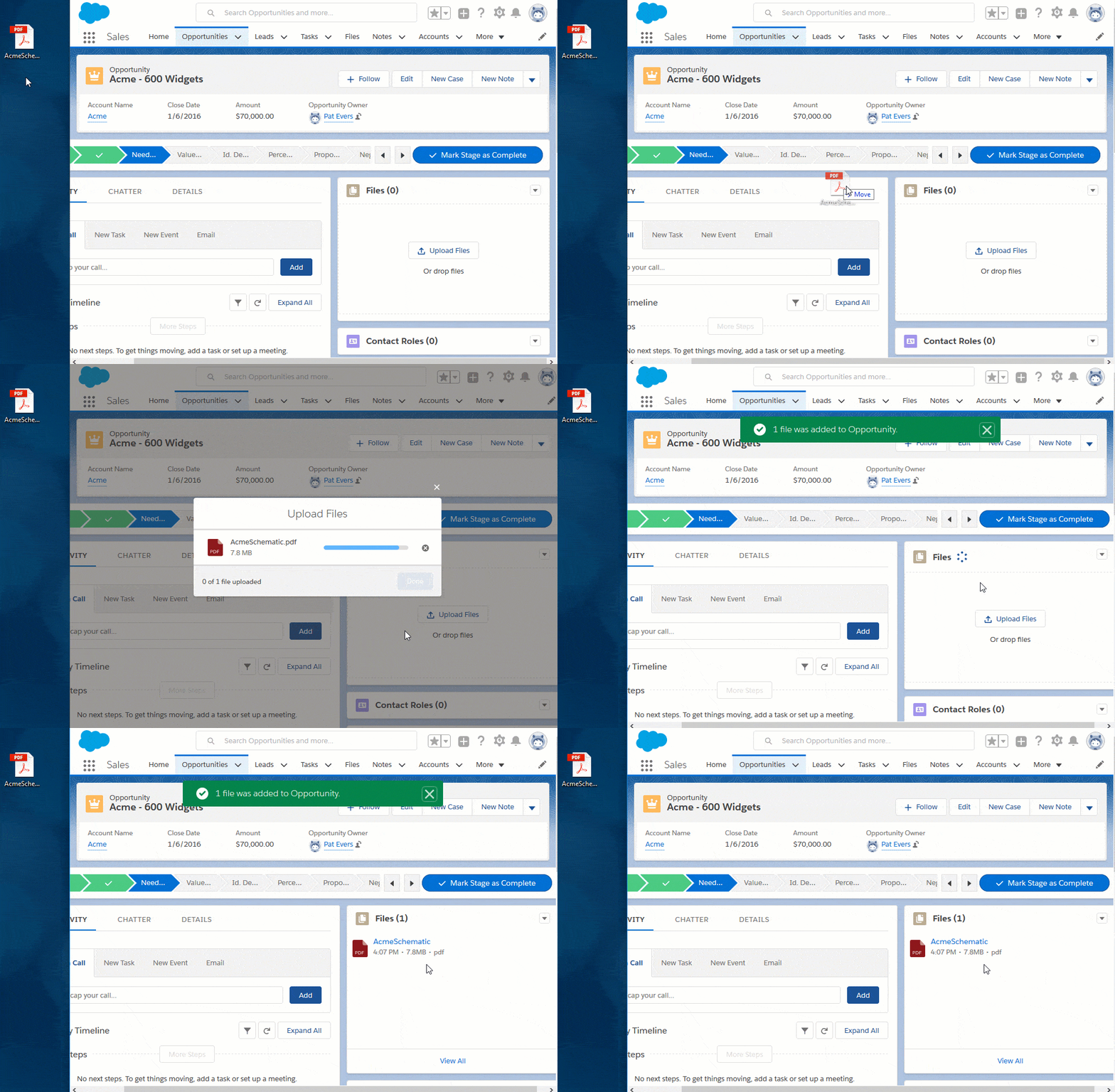
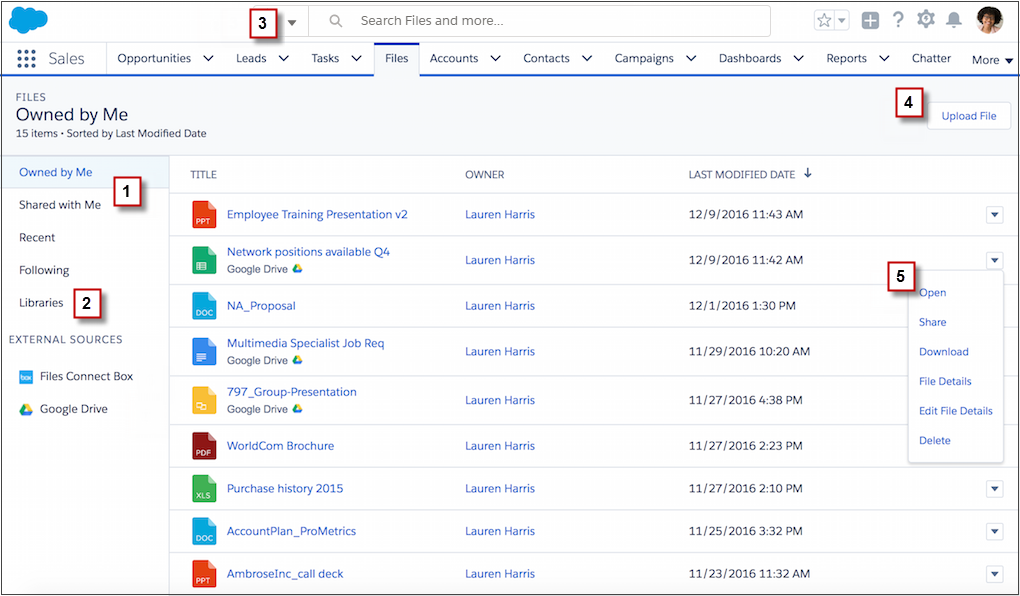
Salesforce Files brings all your documents, presentations, and libraries into one central place for quick access.
The Files Home page in Lightning Experience lets you browse, preview, organize, and share files without leaving the app.
What makes it great?
You can attach anything your team needs contracts, product brochures, presentations, proposals, price sheets, or reports right to the customer’s record. This means:
- No more searching through emails
- No more trying to remember where you saved a file
- No more outdated versions floating around
Everything stays organized and easy for your whole team to find.
7. Visualize and Manage Work with List Views and Kanban View
Salesforce gives you dynamic tools to organize records and visualize pipeline flow:
Custom List Views:
- Create segmented views (e.g., “My Hot Leads This Month”, “Deals Closing This Quarter”).
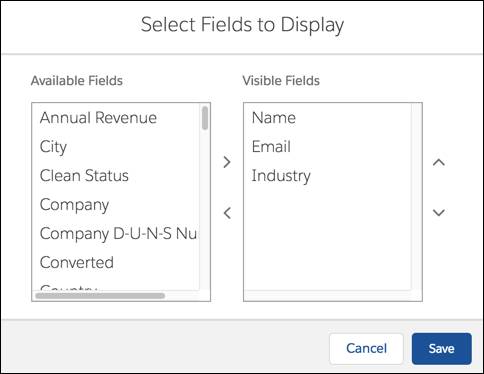
- Pick and reorder custom columns to display only relevant metrics.
- Perform Inline Editing to update multiple records directly from the list without opening each one.
Kanban Board View:
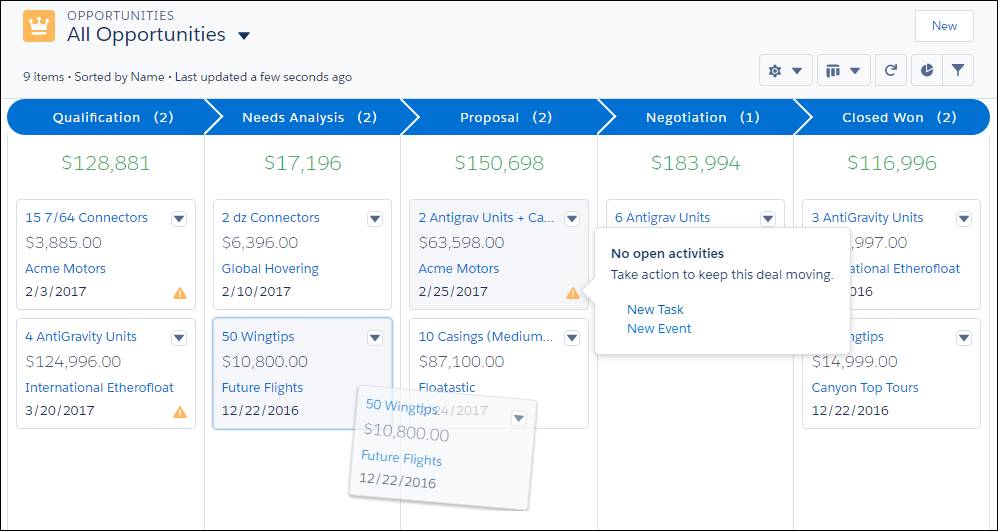
- Convert any standard or custom list view into an interactive visual board with cards organized by status or stage.
- Drag-and-Drop Updates: Move an Opportunity or Case card from one column to another to update its stage instantly.
- Summarized Metrics: See real-time totals and record counts at the top of each column.
- Warning Alerts: Spot records with overdue tasks or missing activities flagged directly on their Kanban cards.
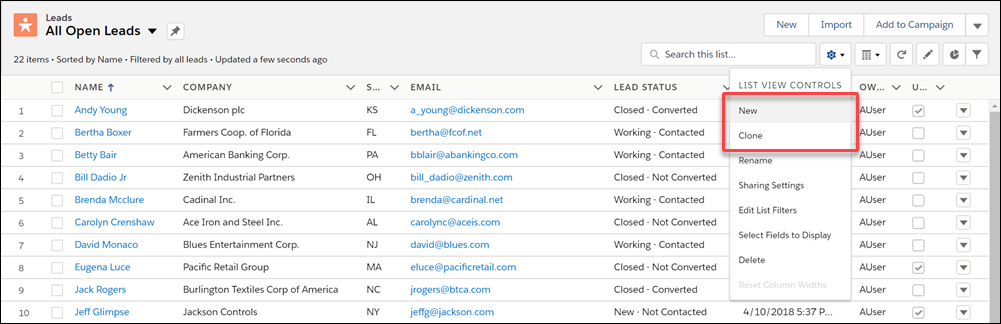
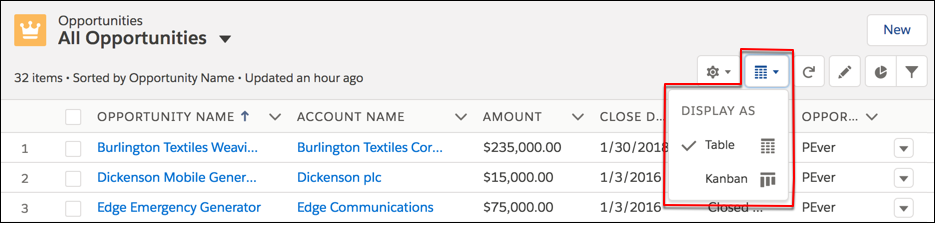
In Lightning Experience, you can create a new list view using the List View Controls menu. Choose New to build one from scratch or Clone if you want to copy and adjust an existing list. You can also pick which columns appear, so you only see the information that matters to you nothing extra.
Pick the Columns That Appear in List Views
Alternate Point of View with Kanban
If you prefer a visual workflow, switch your list to Kanban View. Instead of rows and columns, each record appears as a card that sits inside a column. These columns usually represent stages, like:
- New
- Working
- Proposal Sent
- Negotiation
- Closed Won / Closed Lost
Kanban works with most objects that have list views, such as Accounts, Cases, Leads, and Opportunities.
This view makes it incredibly easy to track progress. For example:
- You can drag a case from “New” to “In Progress”
- Move a deal from “Proposal Sent” to “Negotiation”
- Instantly see where work is piling up
- Identify stages where opportunities tend to get stuck
Why Teams Love Kanban
Kanban is loved by many users because it’s visual and intuitive. Instead of clicking through dropdowns or opening multiple records, you can simply drag and drop a card into the next stage. It feels natural and saves a lot of time.
Conclusion
Salesforce is more than just a place to store customer information. It’s a complete business platform that helps you to manage relationships, automate work, close deals, and grow smarter.
From the 360-degree customer view to automation, reporting, and mobile flexibility Salesforce supports every part of your workday. And this is just the beginning. With the AppExchange, Integrations, and AI-powered insights, Salesforce can grow with your business and keep getting more powerful.
Looking to customize or optimize your Salesforce org? Whether you need to hire an experienced Salesforce Consultant, or bring on a certified Salesforce Admin, our comprehensive hiring guides will walk you through finding the right talent for your business.
FAQ
How can a business get started with Salesforce without feeling overwhelmed?
Start simple: configure clear deal stages with Sales Path, automate form capture with Web-to-Lead, and track a few core metrics on a basic dashboard before moving on to complex automations.
When should I use Kanban View instead of standard List View?
Use List View for spreadsheet-style viewing and bulk inline editing; use Kanban View to visually drag-and-drop deals through pipeline stages and track bottlenecks.